
Research Programs
Sponsoring public lectures, conferences, workshops, and cultural events on Korea-related topics, the Center for Korean Research works to advance academic knowledge and a greater public awareness of Korea in the New York City area and, more broadly, North America.
This new annual program in Itoshima, Japan, is offered in partnership with the Unson Foundation, a nonprofit foundation that exists to study the most challenging social and environmental problems generated by capitalism and to help build new social systems that will foster long-term human wellbeing.
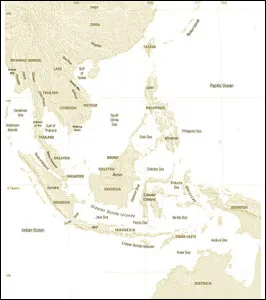
The Vietnamese Studies initiative, housed in the Department of East Asian Languages and Cultures, offers courses at the undergraduate and graduate levels focused on the society, history, politics, and culture of Vietnam from the premodern era to today, as well as language courses at all levels.
The Japan Research Program focuses on Japan’s evolving foreign policy strategy, through public policy-related events and activities concerned with Japan’s relations with the U.S., with other countries in the Indo-Pacific region, and globally.
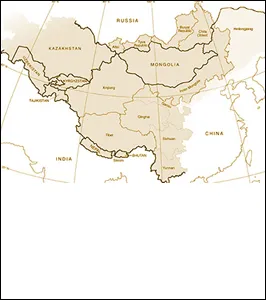
Columbia’s Modern Tibetan Studies Program is the first program in the West dedicated to teaching about the society, history, culture, and economics of modern Tibet.
Research Opportunities
The Robert M. Immerman Professional Fellows Program of the Weatherhead East Asian Institute provides East Asia-focused mid-career professionals with a one-of-a-kind research and learning community at one of the world’s most prestigious universities and within a dynamic city.
The Visiting Scholars Program of the Weatherhead East Asian Institute is designed to enable faculty and scholars from or with ties to East Asia to enrich their academic careers by engaging in research and scholarship related to East Asia at Columbia University.
WEAI occasionally receives additional listings for research grants and positions. Check this space for current internal and external opportunities.
University Seminars
The Korean Studies Seminar is an interdisciplinary forum that brings together scholars, artists, and professionals working on Korea-related subjects from a wide variety of disciplines: history, literature, art history, visual and media studies, architecture, religion, sociology, anthropology, music, and performance studies. The seminar discusses current research and issues in the study of Korea drawn from the dynamic intellectual community in and around New York City.
This seminar is concerned with the politics, society, culture, and international relations of China from the early 19th century to the present. Its broader purpose is to explore the evolution of Chinese civilization over the past century of revolution and rapid social change. Papers—work in progress—are circulated to members and associates in advance of each meeting. Authors are asked to give a brief oral introduction, after which a discussant comments. The entire remainder of each session is comprised of members’ reactions to the paper and the author’s responses.
The Modern Japan Seminar is concerned with the history, politics, society, and culture of Japan from the late 19th century to the present. It emphasizes interdisciplinary dialogue among historians, anthropologists, sociologists, literary critics, and other scholars from New York-area institutions. The seminar meets regularly to discuss a paper from a work in progress by a member or invited speaker. Pre-circulation of papers and discussant comments encourage in-depth discussion and debate.
This seminar is concerned with the contemporary political economy of Southeast Asia, and in particular with its international dimensions. The agenda includes current problems of economic and political change in the countries of the region, as well as issues in relations with the United States, Japan, China, and Russia. The seminar membership includes policymakers from the public and private sectors, as well as scholars, and the group as a whole has a strong policy orientation.