
The Unson Microcollege Program: 2025 Itoshima Survey Trip
Itoshima Survey Trip Report, July 2025
I’m happy to report that the Columbia-Unson Microcollege Program is off to a flying start. In July, a delegation of Columbia faculty and Ph.D. summer fellows visited Itoshima to conduct an initial survey for the microcollege summer program. We met with academics from Kyushu University and elsewhere, Unson board members and associates, local farmers, fishermen, and oyster farmers. It was a packed schedule, but highlights included a tour of Fukuoka’s Tatara River estuary courtesy of the Fukuoka Wetland Conservation Research Group, and a visit to Dazaifu Tenmangu, where ecologist Dr. Masa Seto (NPO Soma) showed us his work improving soil drainage around the shrine’s ancient trees.
We also tried our hand at bamboo forest maintenance and purse seine fishing, to get a feel for the kind of hands-on experiential learning that will be a key element of the microcollege curriculum. We held our first seminar focused on the relationship between long-term human wellbeing and watershed governance in Japan, with Prof. Eisuke Tachikawa (Keio University) and Columbia alumna Prof. Michelle Hauk (Washington University Saint Louis) as guest speakers. We brainstormed future directions for the microcollege with help from the Unson Ph.D. summer fellows, Masanori Seto of NPO Soma and Columbia alumni Ana Keilson and Justin Reynolds of the Gull Island Institute in Woods Hole, Massachusetts. And we ate a lot of really excellent, locally grown food.
The first pilot program will launch next summer and is provisionally scheduled for May 21st through June 7th, 2026. The theme for next year’s program will be “Thinking Like a Watershed: Ecology and Society in Rural Japan.” The pilot program (including flights, board, and accommodation) will be fully funded thanks to the generous support of the Unson Foundation in Itoshima, and all Columbia and Barnard undergraduate and MA students will be eligible to apply. No Japanese language ability is required. Applications will open soon, so please watch this space for further updates. For now, I hope the photos below will whet your appetite for what lies ahead.
Paul Kreitman
Unson Microcollege Program Director
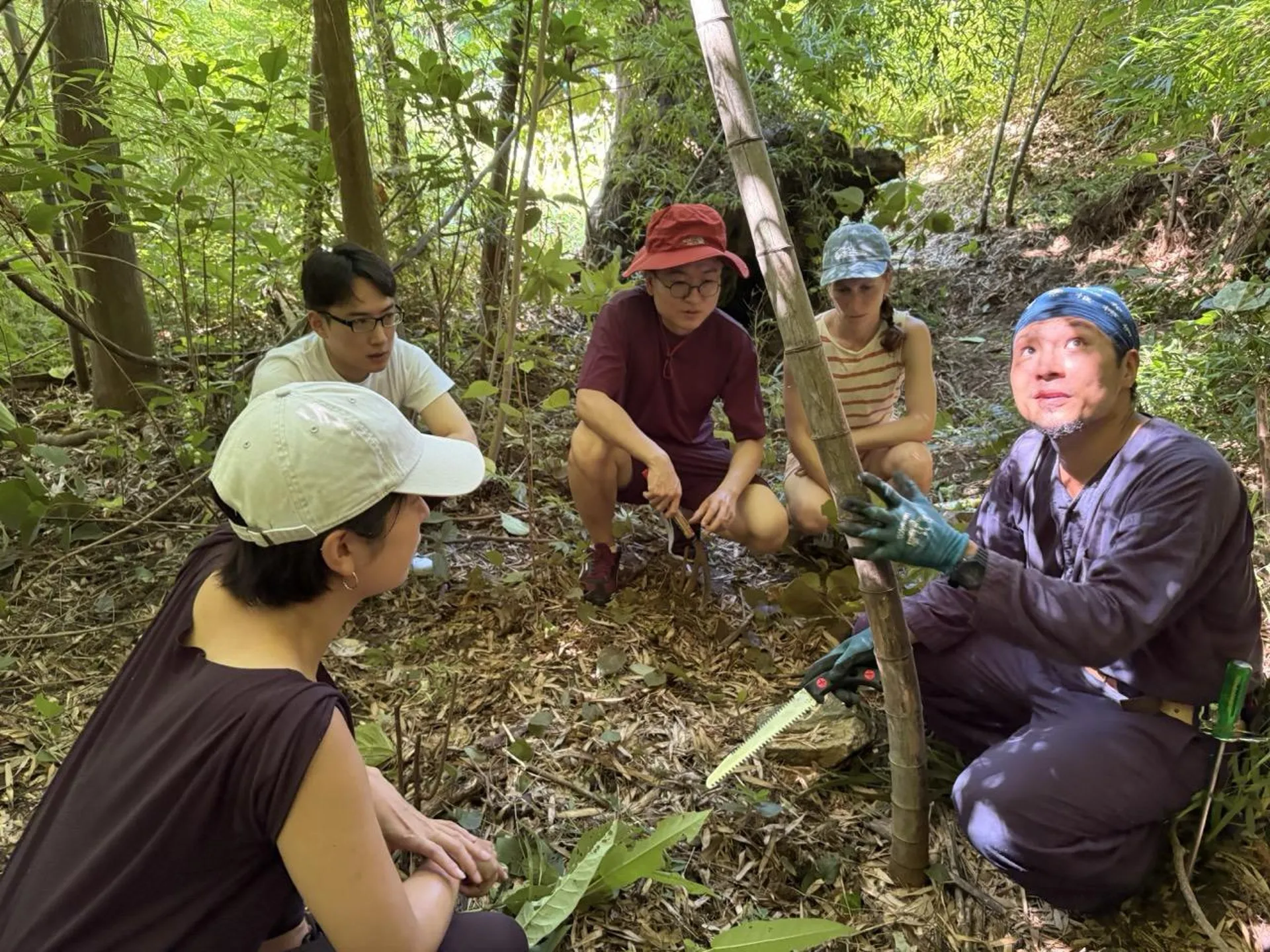
Masanori Seto, Ph.D. (right), ecologist and civil engineer, explains how to cut bamboo stems — part of a larger project to restore regional woodlands.
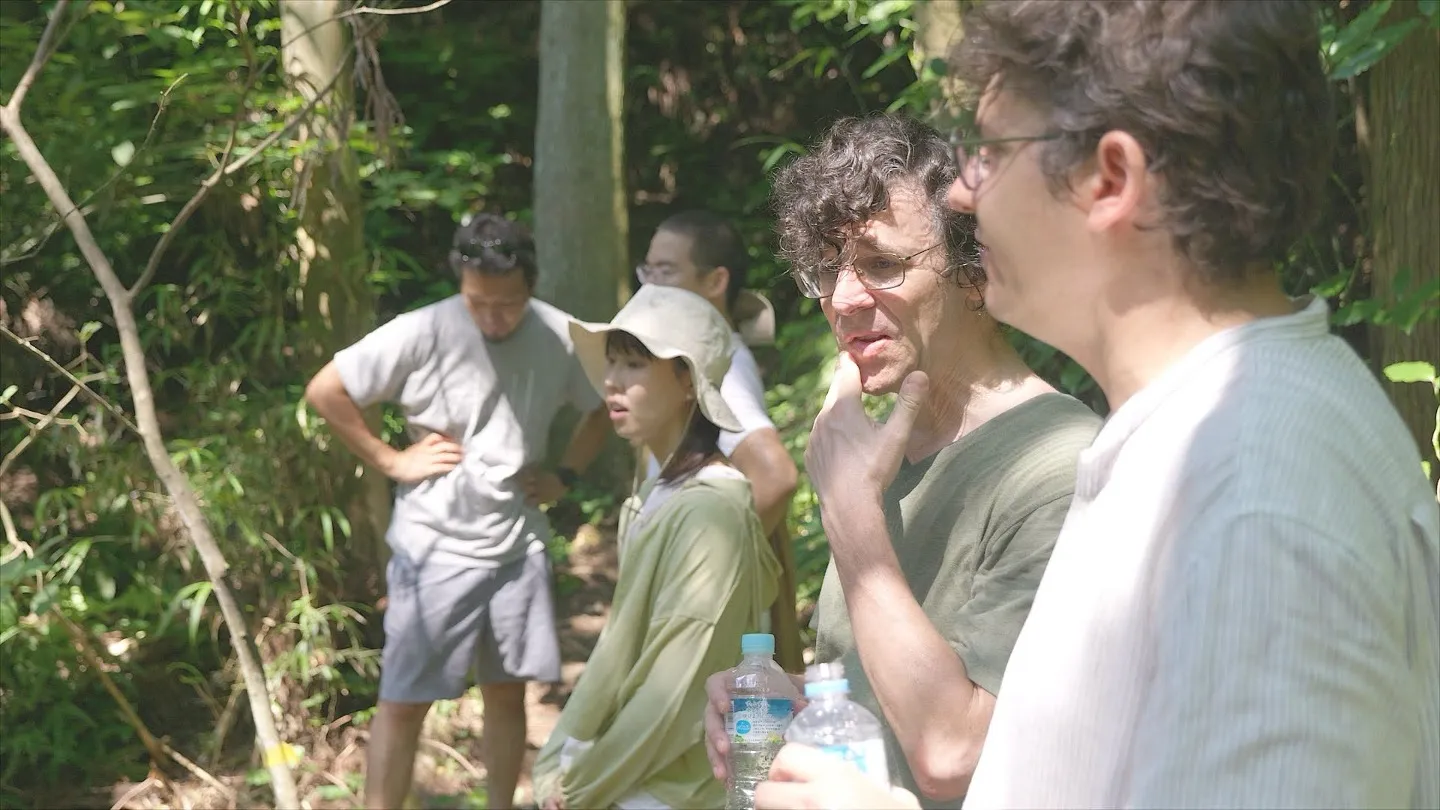
Hiking through Raizan River’s watershed, Itoshima.
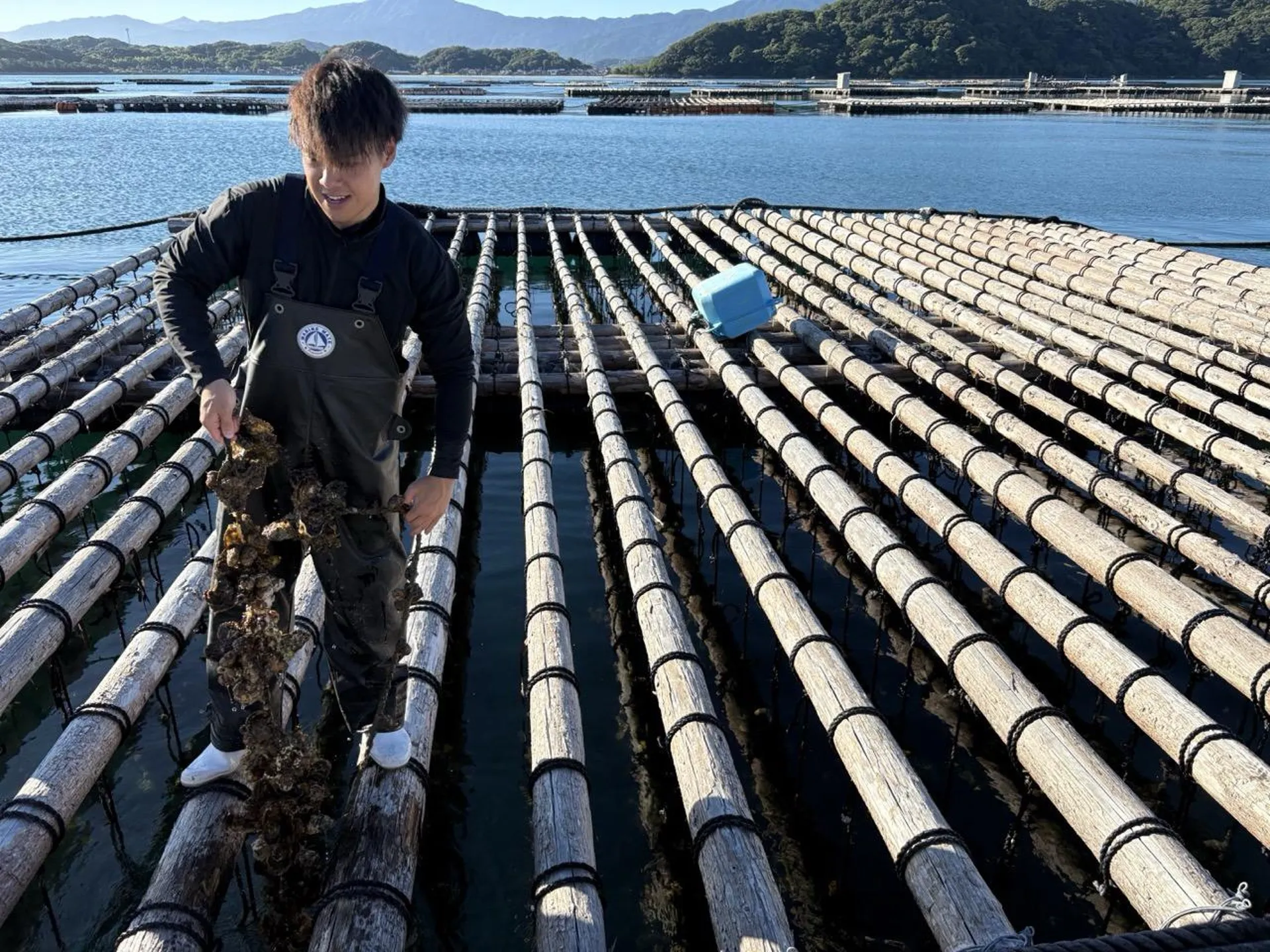
Hauling oysters in Shimakishi, a fishing aquaculture port in Itoshima.
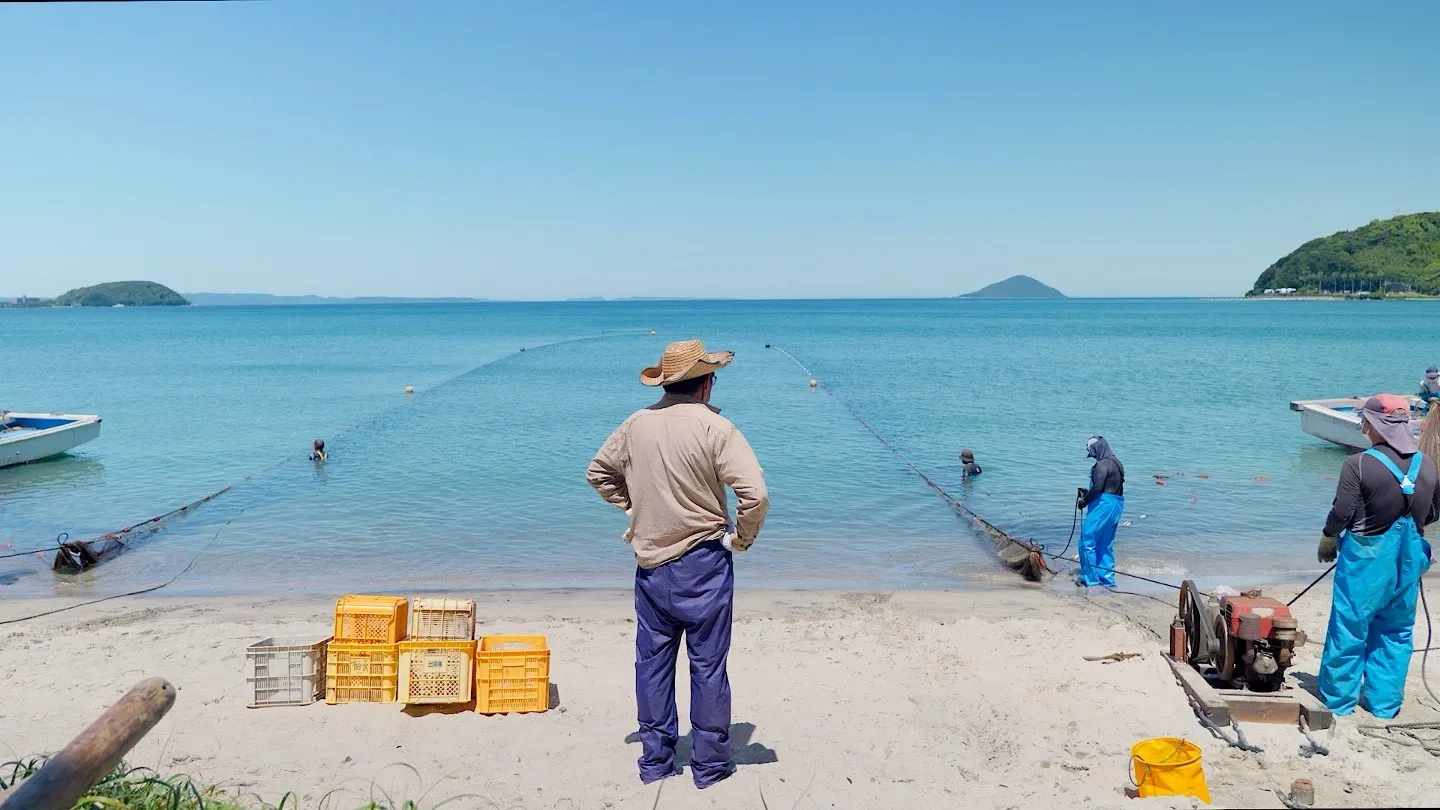
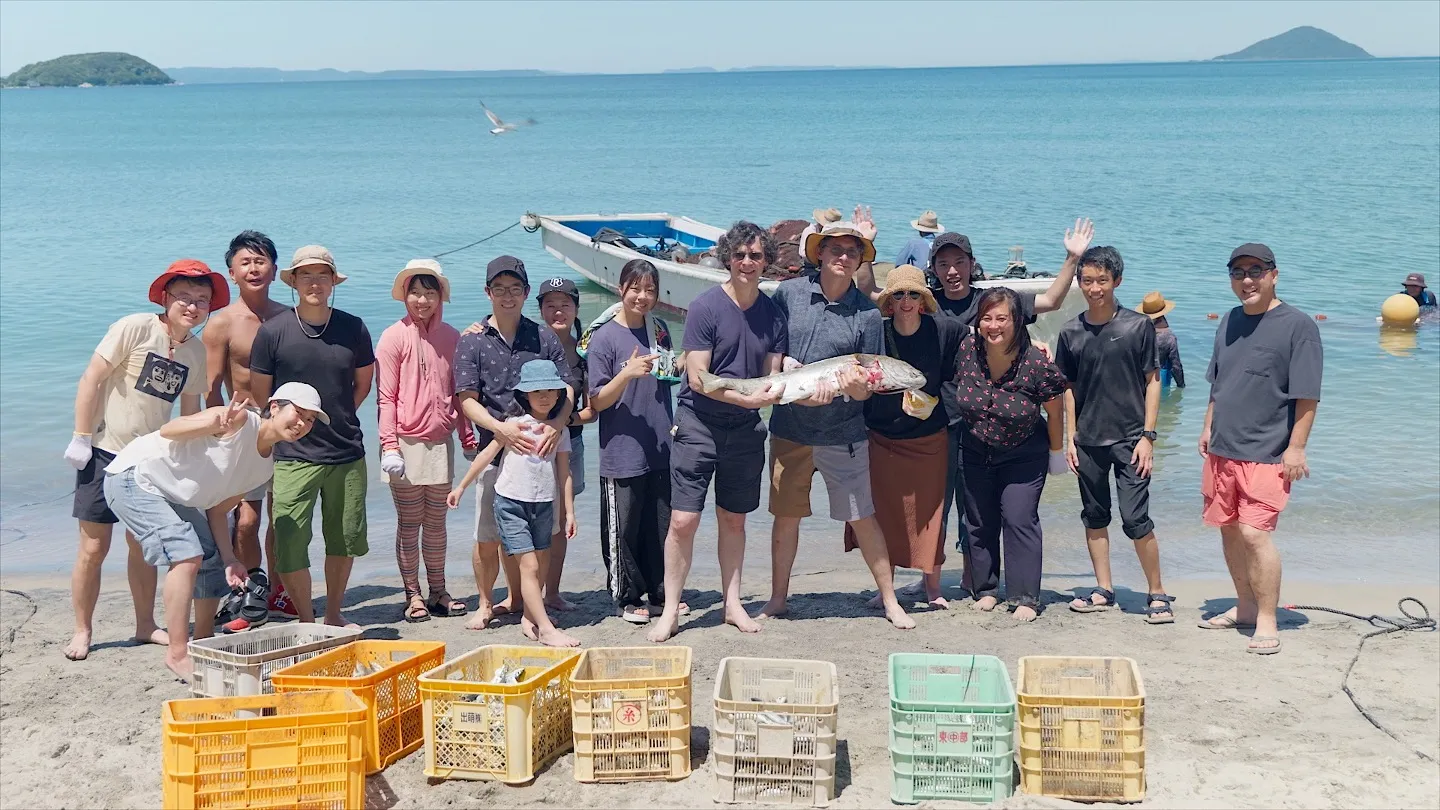
Jibiki-ami fishing at Hatae Beach, Itoshima. Jibiki-ami is a purse seine fishing technique that uses a large, wall-like net to encircle a school of fish, then closes the bottom with a drawstring to trap the fish.
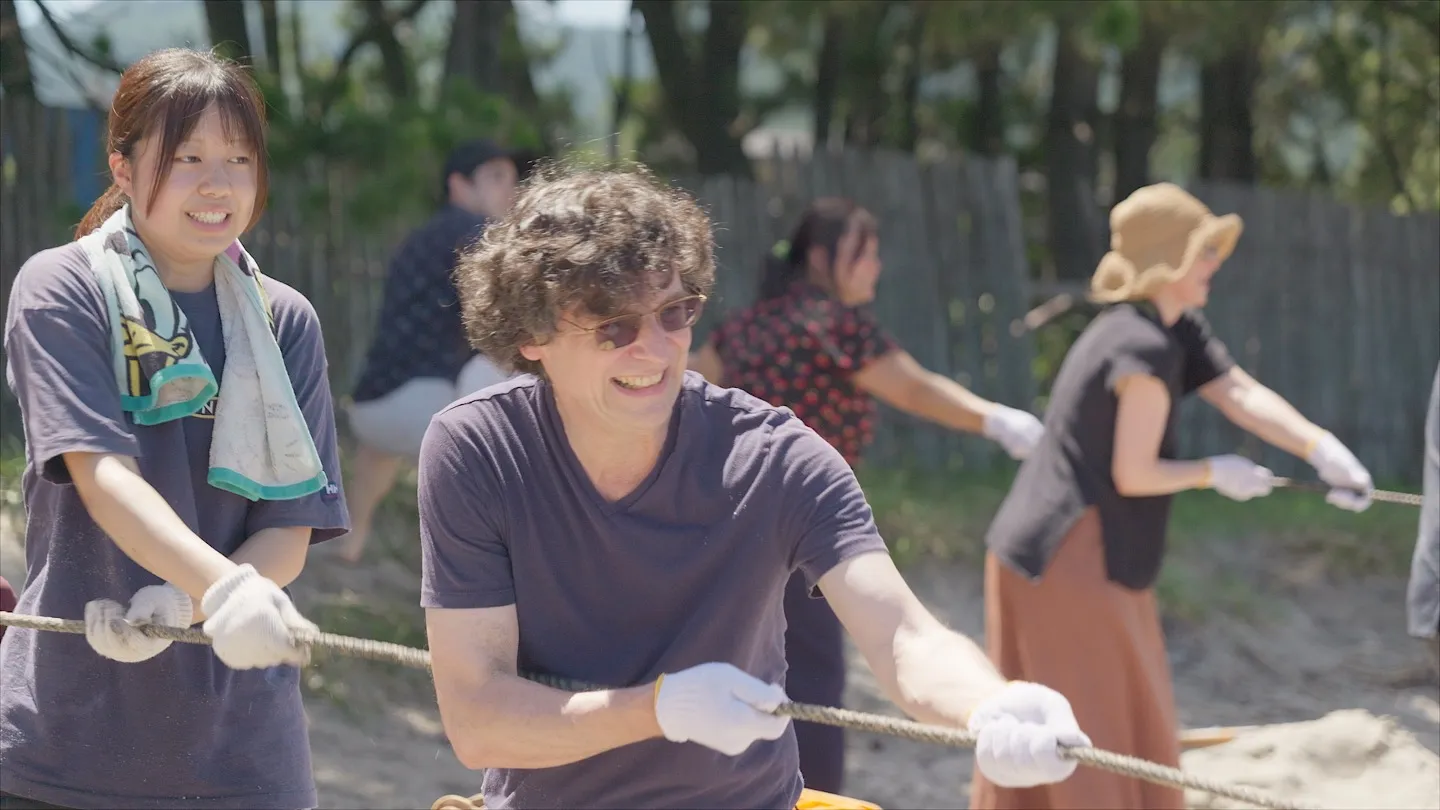
Michael Como (center), Tōshū Fukami Associate Professor of Shinto Studies, lending a hand in jibiki-ami purse seine fishing.
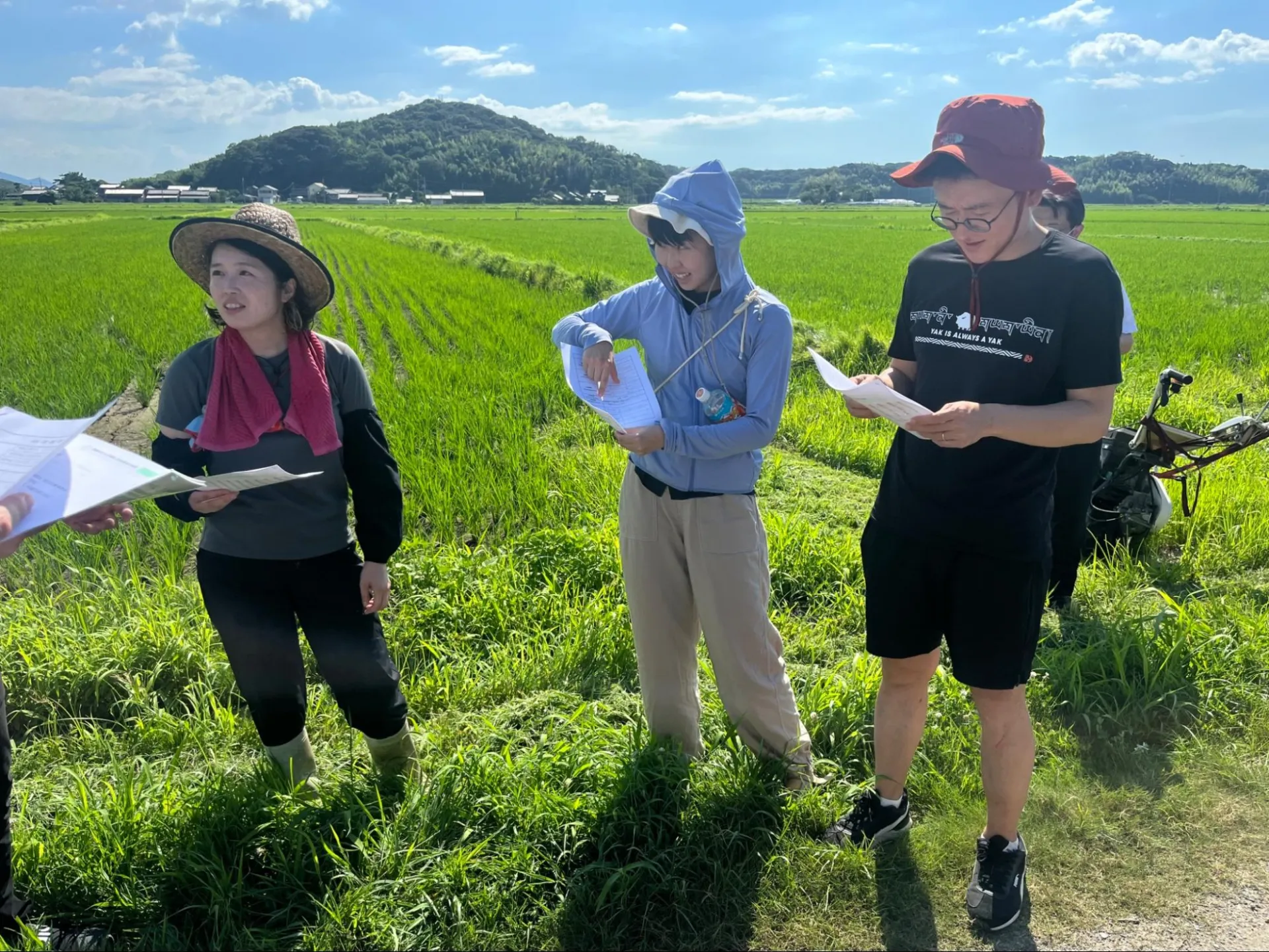
Learning about paddy field irrigation with the Itoshima branch of Japan Agriculture Cooperatives.
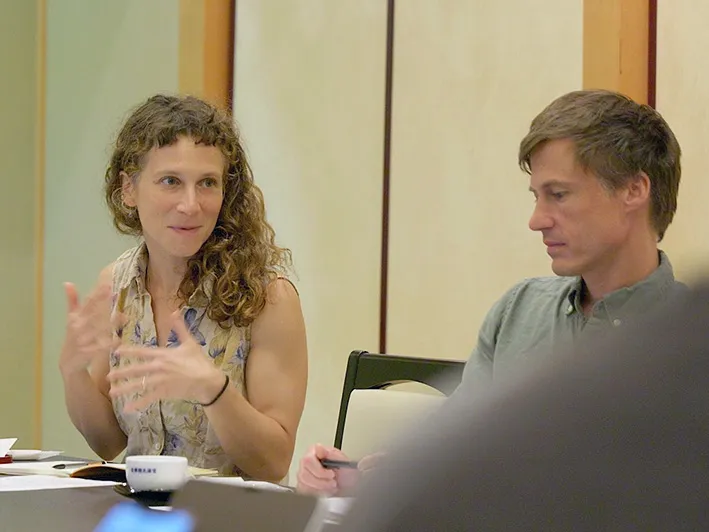
Ana Keilson and Justin Reynolds of the Gull Island Institute explain the “three pillars” pedagogical philosophy of academics, physical labor, and self-governance.
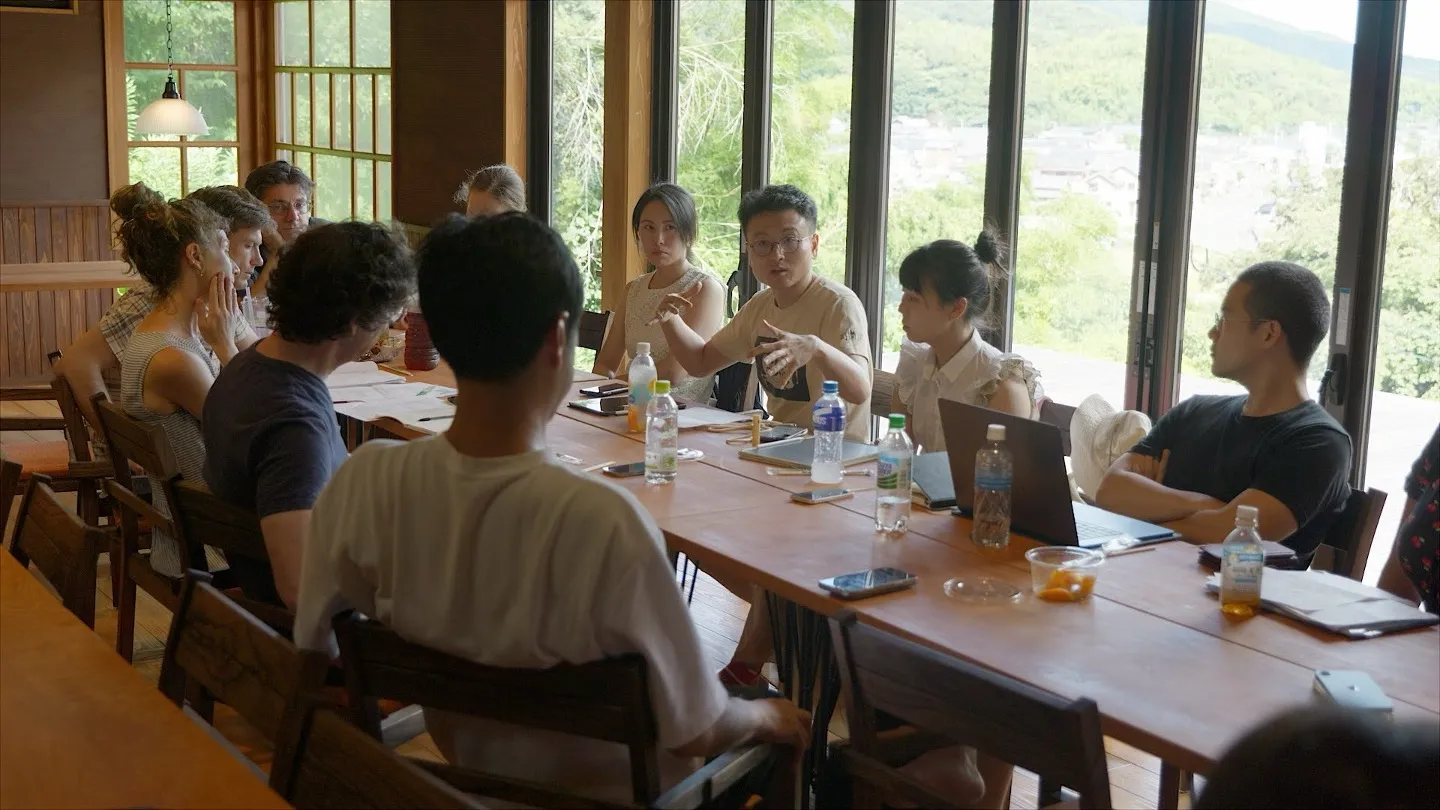
Xuexin Cai, an Unson Ph.D. summer fellow (EALAC), explaining his draft syllabus “Thinking Like a Watershed” during the survey trip.
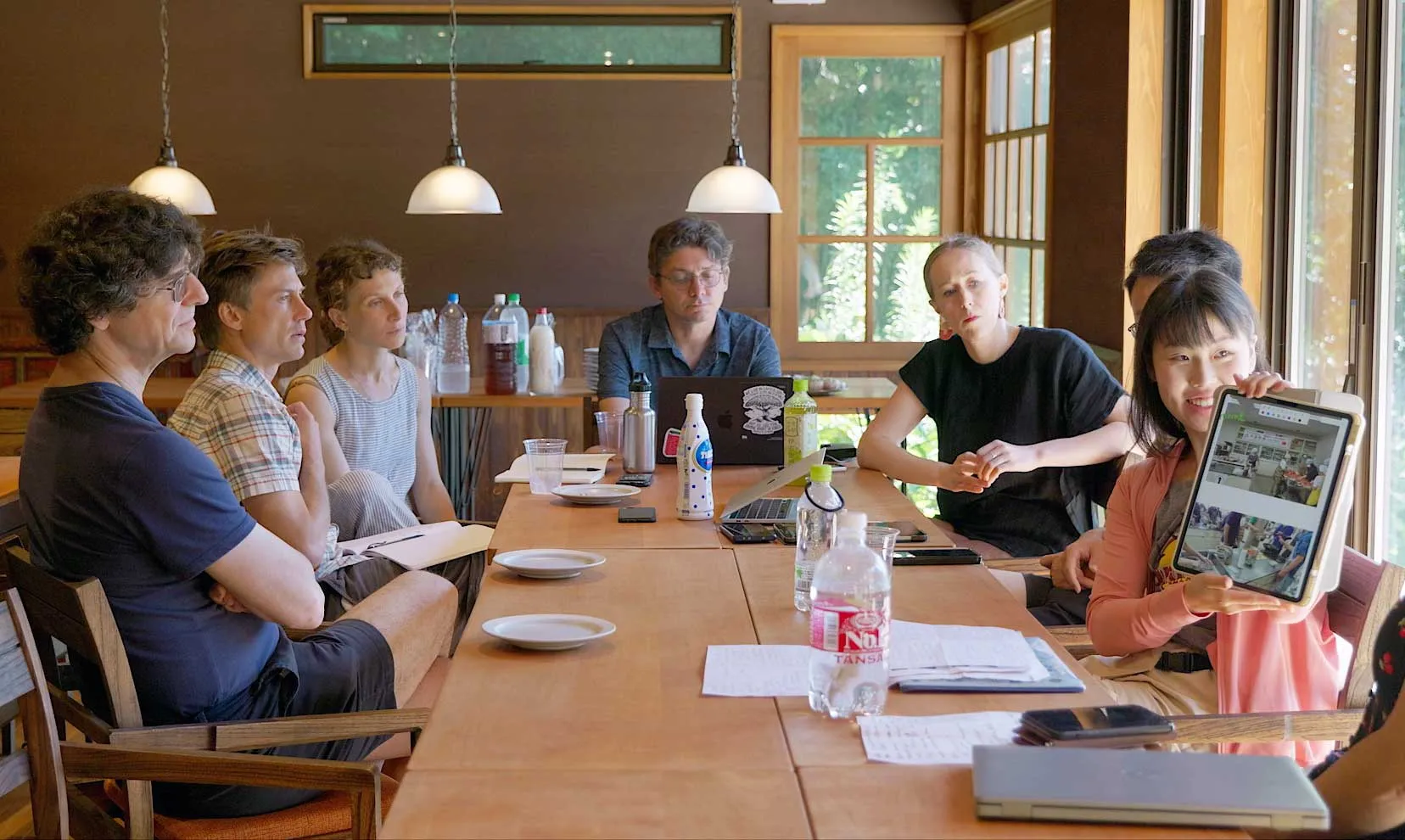
Mako Miura, another Unson Ph.D. summer fellow (Teacher’s College), sharing her ethnographic research on multi-lingual early childhood education in Itoshima.