Inaugural ‘Columbia Summer in Itoshima’ Offers Hands-on Learning in Rural Japan
An innovative new place-based program combines agriculture, fishing, conservation, and intensive academic study.
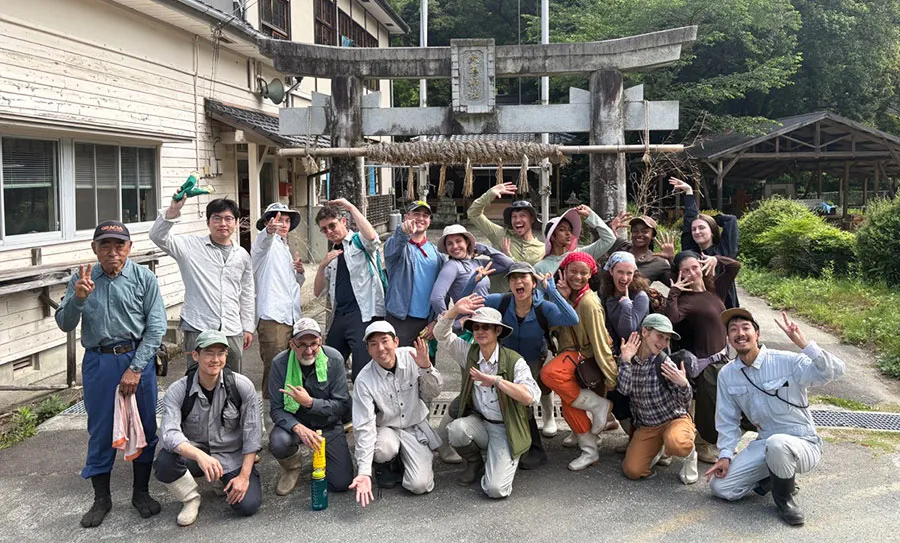
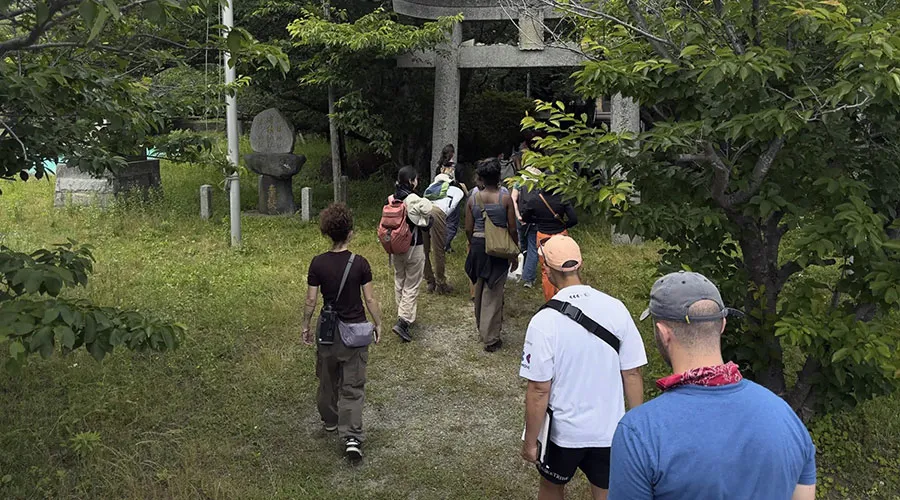
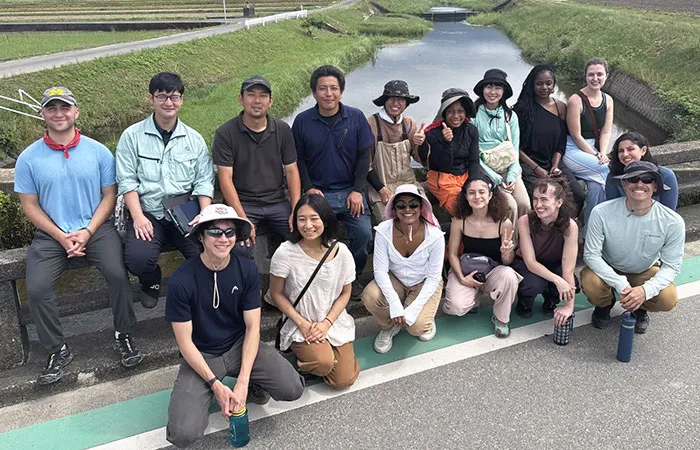
Participants in the Weatherhead East Asian Institute’s new Columbia Summer in Itoshima program in front of a torii at Sansonjuku, June 2026.
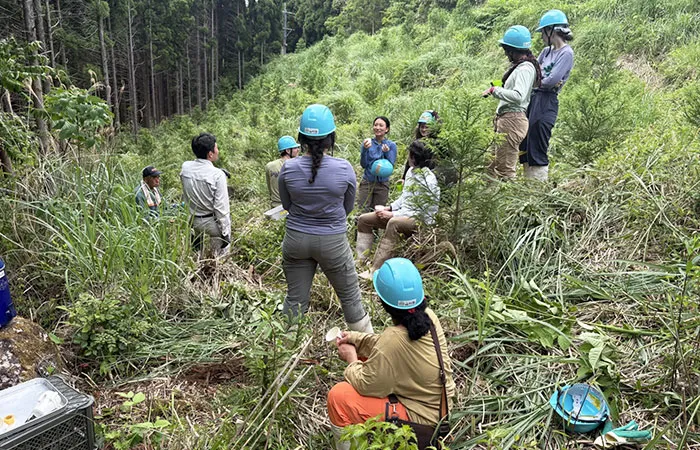
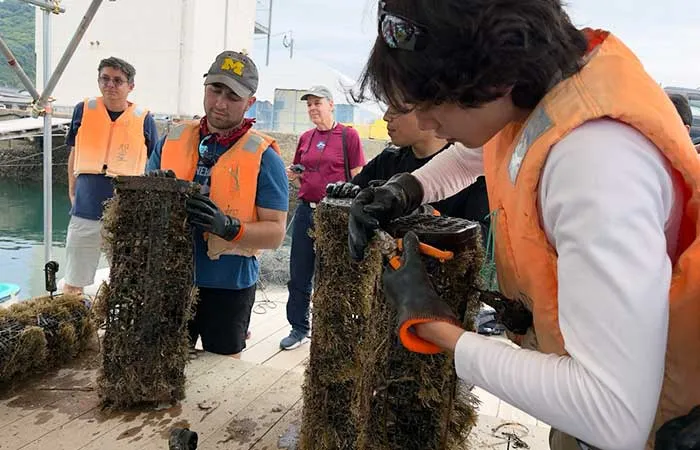
This summer, 13 Columbia students traded Morningside Heights for a restored farmhouse among the rice paddies of Itoshima, a coastal city on Japan's southern island of Kyushu. For 17 days, they cleared bamboo groves, hauled oysters, cooked their own meals, and read demanding books slowly, together. This was the inaugural Columbia Summer in Itoshima, a pilot program of the Weatherhead East Asian Institute and the Center for Undergraduate Global Engagement, with support from the Unson Foundation, organized around the theme "Thinking Like a Watershed: Ecology and Society in Rural Japan." Rather than study a landscape from a distance, students were asked to live and work inside one — from the mountain forests of Yame down to the fishing ports of the Itoshima coast.
The 2026 cohort brought together undergraduate and MA students from Columbia College, the School of General Studies, the School of Professional Studies, and the Columbia Climate School — dancers and deckhands, wrestlers and watershed educators — joined by two Unson Ph.D. Summer Fellows, Caixia Mao (Urban Planning, GSAPP) and Hekang Yang (EALAC). Building on a pedagogical model developed with the Gull Island Institute, the program rested on three pillars—academics, labor, and self-governance. Any single day might involve cooking breakfast or dinner for the group, grappling with bamboo or oyster cages, or a discussion seminar that ran past dark.
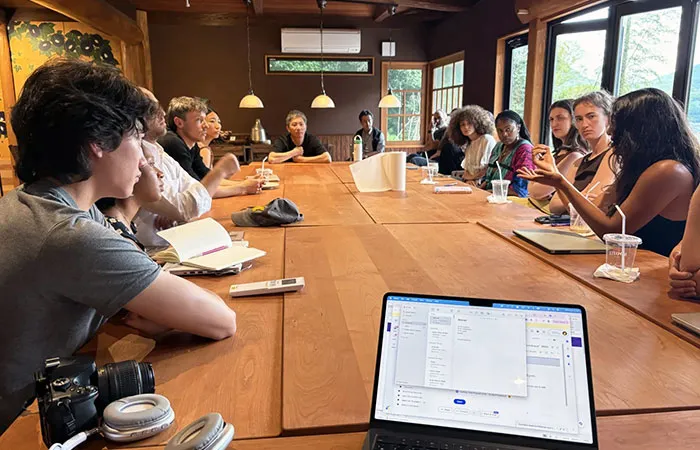
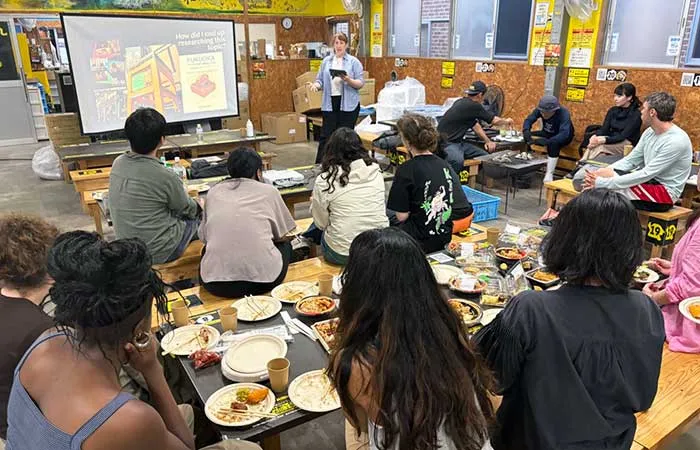
At the heart of the academic program were two intensive "deep reading" days: long, distraction-free encounters with a single text, closed out by evening seminars. The first unfolded at Sansonjuku, an education and rural revitalization nonprofit housed in a former elementary school in the mountain village of Yame; the second at the Unson Foundation's base overlooking the port of Shimakishi.
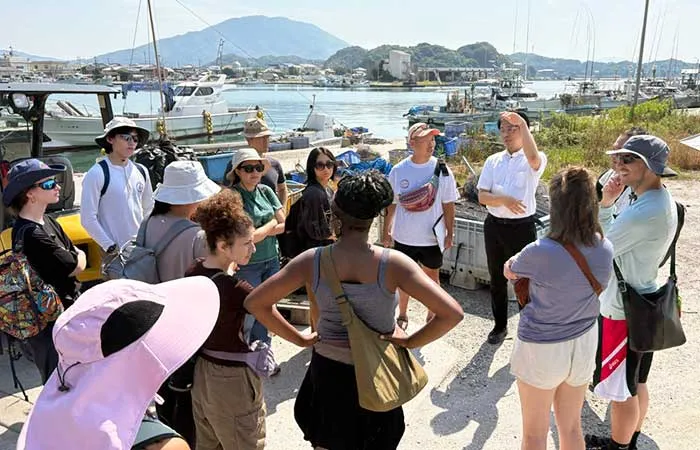
The readings never stayed on the page for long. Students cleared bamboo groves and cut underbrush in Yame's planted forests, planted sweet potatoes with the Itoshima branch of the Japan Agricultural Cooperatives, and hiked Mt. Homan to Dazaifu Tenmangū, where ecologist Dr. Masanori Seto (NPO Soma) showed them his work restoring soil drainage around the shrine's centuries-old trees. On the coast, they toured Itoshima's fisheries with Mabuchi Takashi of Jizakana Bank, hauled oysters alongside farmers in Shimakishi, and joined the Fukuoka Wetland Conservation Research Group for a beach cleanup at the Tatara River estuary on Hakata Bay.
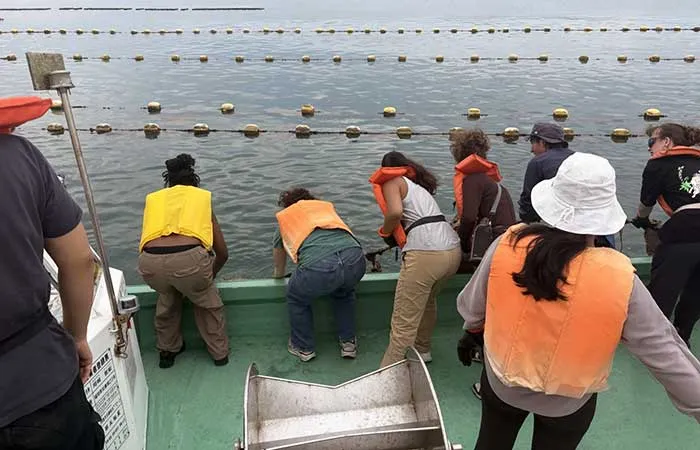
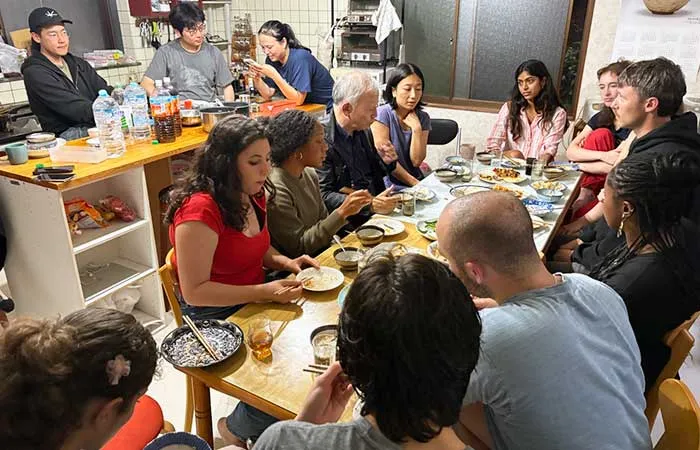
Just as formative was everything in between. At Guesthouse Itoyui, students slept on futons, shopped at the local farmers' market, and cooked communal meals on the budget of an average Japanese household — learning to grill fish from a local cooking teacher along the way. In regular self-governance meetings, the cohort deliberated over its own schedule and shared life, a practice that culminated in two entirely student-designed program days. The program closed with a leaving party at the Unson Foundation's base, where students cooked for and celebrated with the farmers, fishers, and researchers who had welcomed them into their watershed.
Following the success of the pilot, planning is underway for the program's return in summer 2027. Application details will be announced on the Columbia Summer in Itoshima website in the coming weeks.