
MTSP Centers Indigenous Voices, Practices in Himalayan Climate Change Conference
Comprehensive two-day event models new approaches to scholarly inquiry and offers a chance to hear from those directly affected.
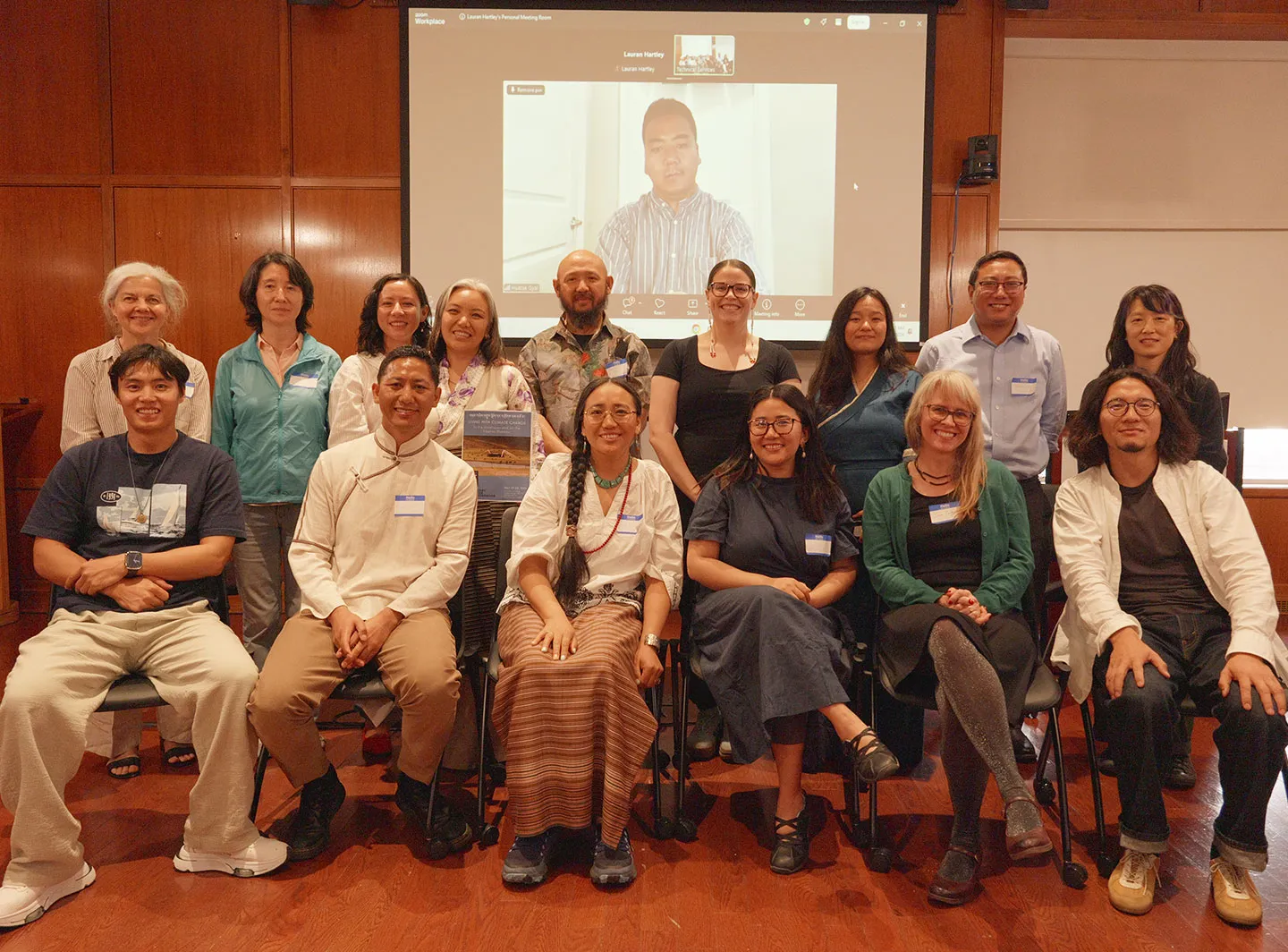
“Living with Climate Change in the Himalayas and on the Tibetan Plateau” conference speakers and organizers at Columbia University on May 28, 2026. (Photo: Khashem Gyal)
By Caitlin Hayes and Dr. Tashi Deykid Monet
The end of the 2025-2026 academic year presented the Columbia community and guests with a unique opportunity to learn from some of the Himalayas and Tibetan Plateau’s most prominent voices on the effects of climate change in the region, as the Weatherhead East Asian Institute and its Modern Tibetan Studies Program proudly hosted the conference “Living with Climate Change in the Himalayas and on the Tibetan Plateau” on May 27-28, 2026, with an additional film screening preceding the gathering on the evening of May 26. Lead sponsorship was provided by the Henry Luce Foundation.
The pre-conference film screening event featured a compelling documentary, Sacred Wisdom, Sacred Earth (2025), illuminating how the efforts by the Tribal Nations of Wisconsin to restore their spiritual, cultural, and environmental resilience are deeply rooted in their sacred connection to the Land and Waters of the Great Lakes. The film was produced by Indigenous artists and Culture Keepers of the region and supported by the Loka Initiative at the University of Wisconsin-Madison. Following the screening, Dr. Tashi Dekyid Monet moderated a panel discussion featuring Zoe Fess (a Culture Keeper of the Hoocąk Nation and graduate student of Agroecology at the University of Wisconsin) and Dr. Yuria Celidwen (a Nahua and Maya Bats’il K’op scholar and UC Berkeley research scientist). Their conversation highlighted Indigenous communities’ contributions to the environmental health and climate solutions while combating multiple threats here on Turtle Island, and drew attention to broader global Indigenous efforts to address the causes and the impacts of climate change.
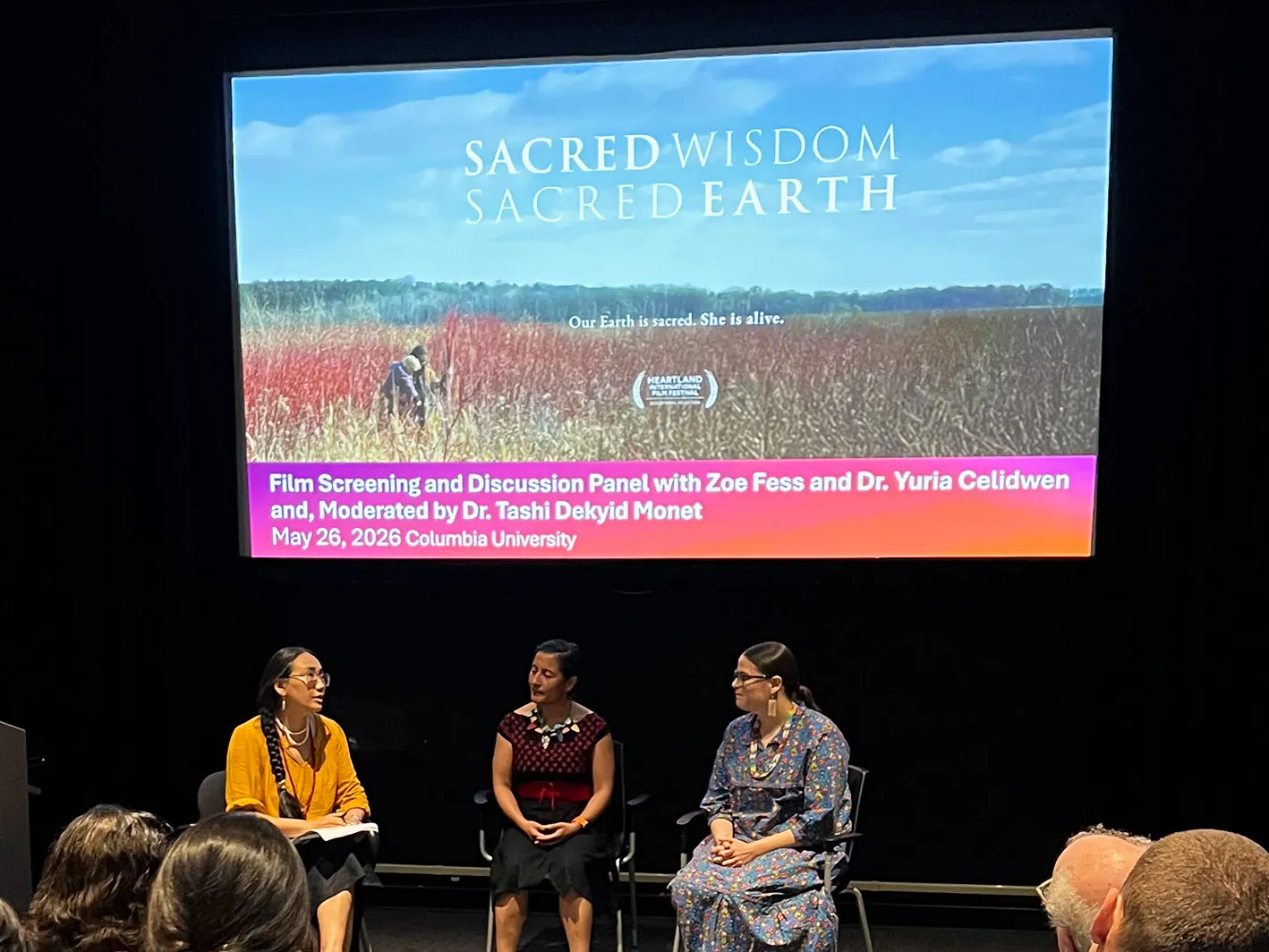
WEAI Postdoctoral Scholar Dr. Tashi Dekyid Monet (L) moderates a post-screening discussion of the film Sacred Wisdom, Sacred Earth with Zoe Fess (U of Wisconsin-Madison) and author Dr. Yuria Celidwen (UC Berkeley) on May 26, 2026.
The two-day conference—which featured the contributions of 18 established and up-and-coming scholars, community leaders, and practitioners representing an array of specialties and experiences—was led by Dr. Tashi Dekyid Monet, the Luce Postdoctoral Research Scholar in the Modern Tibetan Studies Program (MTSP) at Columbia University, and organized along with a core team of six other scholars from institutions across North America and Asia and Dr. Lauran Hartley, Director of MTSP. In her opening remarks on the first day of the conference, Dr. Dekyid Monet noted how the gathering of scholars from the Himalayas and Tibetan Plateau represented the promise of community-building that transcends manmade borders, and invited participants and attendees alike to listen and come to understand climate change from perspectives of the region’s Indigenous scholars, who bring deep expertise grounded in their traditions and long-term environmental knowledge systems of the region as well as experiences living alongside their communities at the forefront of climate change effects on Asian Highlands.
Day One of the conference featured an engaging array of talks, panel discussions, and film screenings, beginning with keynote speaker Dr. Kalzang Dorjee Bhutia’s presentation “Lap (ལབ།) as an Indigenous Framework for Multispecies Compassion and Wellbeing in the Himalayas.” Dr. Bhutia is a Lhopo scholar and senior fellow at the Centre of Excellence for Himalayan Studies at the Shiv Nadar Institution of Eminence. His talk offered rich examples of how communities in Sikkim observe, strategize, and live with the impacts of climate change and ill-conceived conservation practices, with a particular focus on human-wildlife conflicts. He emphasized the importance of Indigenous knowledge systems, such as Lap—a communal support system that foregrounds multispecies interdependence and compassion in combating the effects of climate change, the legacies of colonialism, and unchecked infrastructural development in the region.
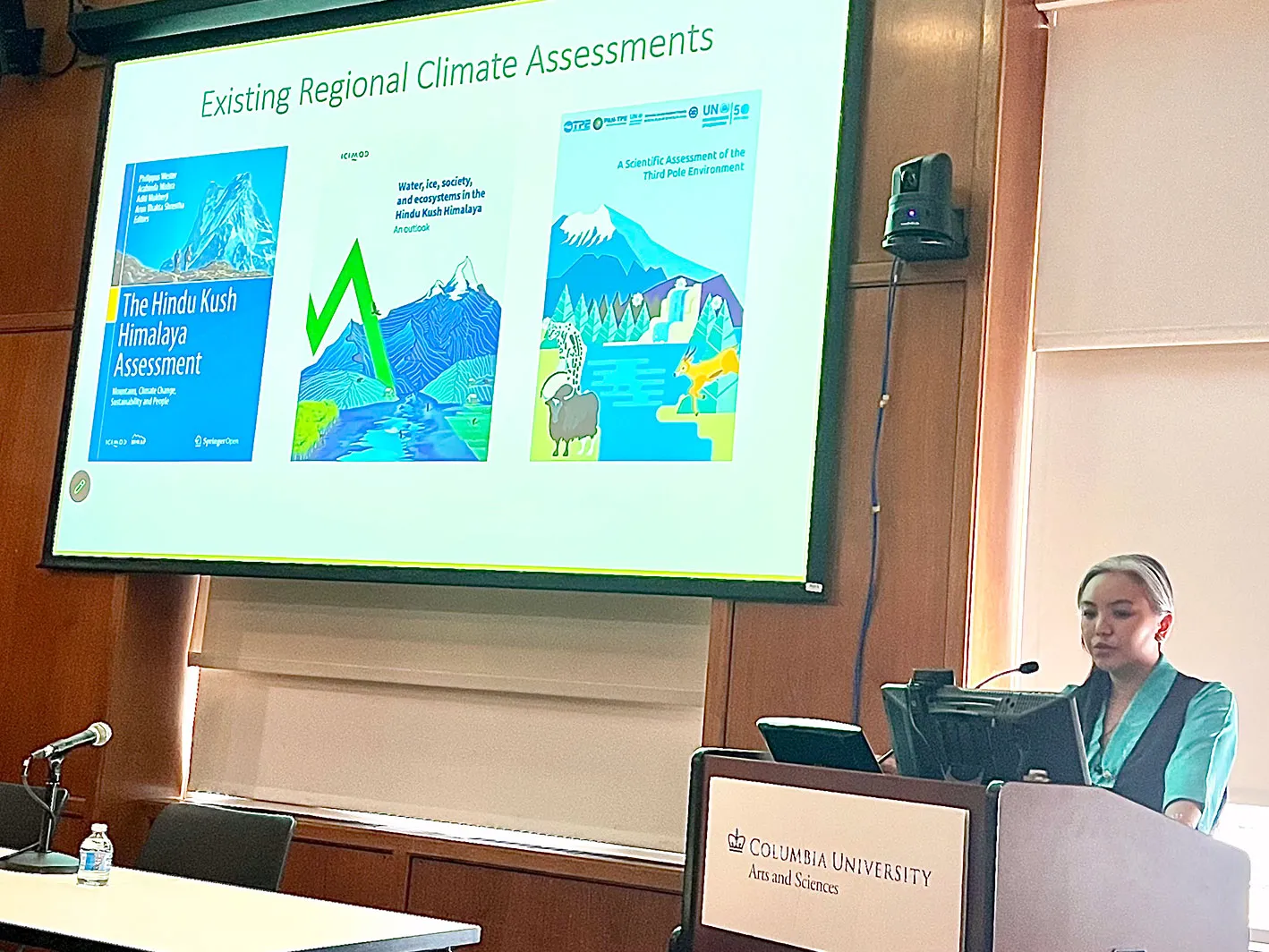
Dr. Pasang Yangjee Sherpa (University of British Columbia) presents on her work to include the Himalayas in the 6th Assessment Report of the UN Intergovernmental Panel on Climate Change (IPCC).
The next panel presented major climate change patterns on the Tibetan Plateau and a critical analysis of the existing climate change assessment for the region. Dr. Lan Cuo, a research scientist and professor at the Chinese Academy of Sciences, presented on climate change patterns of the Plateau and recent scientific observations that demonstrate how the Plateau, especially the eastern regions, is experiencing more frequent extreme precipitation events, which are likely to increase flood risks. Dr. Pasang Yangjee Sherpa (University of British Columbia), drawing from her years of research and contributions to the United Nations (UN) climate change assessment reports, as well as her critical assessment of climate research in the Himalayan region, proposed two important frameworks of climate observation and assessment: First, the need to understand the Tibetan Plateau and the Himalayas jointly as a unique area of climate observation — a "third pole" region along with the other polar regions — in global climate assessment reports such as those by the UN Intergovernmental Panel on Climate Change (IPCC). Second, noting the limits of existing dominant climate assessment tools and the importance of understanding climate change from the perspectives of local regions and their communities, particularly the impacts on their collective wellbeing, Dr. Sherpa proposed the question: What would a wellbeing-focused climate assessment of the area and its people look like?
The afternoon panel focused on the critical need to recognize the complexity and specificity of regional impacts, power dynamics, and priorities. Tenzin Yangkey (PhD candidate in Geography at University of Colorado Boulder, PhD) and Sanggay Tashi (PhD candidate in Anthropology at University of Colorado, Boulder) brought rich ethnographic work to understanding the impact of large-scale clean energy projects on the eastern Tibetan Plateau and Changtang of Ladakh. Their grounded and holistic approach modeled what it means to do research with communities and to prioritize their concerns. In the ensuing roundtable, chaired by Dr. Pasang Sherpa, panelists Dr. Kalzang Dorjee, Dr. Eveline Washul, and Dr. Phurwa Dolpopa emphasized that centering “living with climate change” in climate scholarship would require research to account for not only measurable changes such as temperature and precipitation, but also non-scalable and affective change (e.g., relationship, culture, emotional, community wellbeing) that are brought by and exacerbated by climate change and its solutions. The discussion was concluded on the notes of radical hope and re-turning to traditions as well as the multispecies and more-than-human co-living and solidarities.
The day’s rich conversations about diverse ways of observing, understanding, and responding to, climate change and other intersecting transformations (e.g. large-scale clean energy projects) in the region were animated by the evening’s screening of two documentaries — A Green Trip (2023) and Measuring the Glacial Line (2011) — on how herders in Golok, northeastern Tibet have documented the receding glacial line on Nyenpo Yutse Mountain for two decades as well as their efforts to address the challenges of eroding grazing lands and the disruptions in grassland ecology. The following conversation with the director of the first documentary, Khashem Gyal, further enriched the conversation on how climate scholarship in the region already involves multiple modes of knowing, expressions, and actions.
Day Two offered another full day of panels, roundtables, and a film screening, which addressed themes of community agency, creativity, the challenges of community-led climate observation, adaptation strategies, and environmental protection, as well as the impact of unregulated urban development in the region. The first panel highlighted the importance of community action and engagement in combating the effects of climate change, with Dr. Huatse Gyal (Rice University) and Dr. Lobzang Chorol (Climate Change and Sustainable Development for UT Ladakh) discussing examples of local participation, or the consequences of their absence, in climate-mitigation strategies in communities in Ladakh and Dzorge (Amdo/Sichuan Province). A second panel further explored themes of multispecies co-living with climate change with Dr. Phurwa Dondrub Dolpopa of UBC and Dr. Tenzing Ingty of Jacksonville State University presenting research on human-snow leopard relations in Nepal and traditional ecological knowledge and communal resource governance systems among agropastoral communities in Sikkim, respectively.
After lunch, conference attendees were treated to a screening of scholar and filmmaker Dr. Dolly Kikon’s (UC Santa Cruz) new documentary A Sacred Place (2026). Prior to the film — which chronicles the ways in which Naga residents of Makhel, Manipur keep alive traditional ways of knowing in the face of climate change and development — Dr. Sara Smith (UNC-Chapel Hill) moderated a discussion with Dr. Kikon, who highlighted the importance of practicing de-coloniality in academia by centering communities involved in the knowledge-gathering process. When asked about her thoughts on producing art, Dr. Kikon emphasized the role of failure and incompleteness in the creative process, noting that creating meaningful art is to recognize that we will never be able to truly and completely capture the beauty of the universe in our efforts.
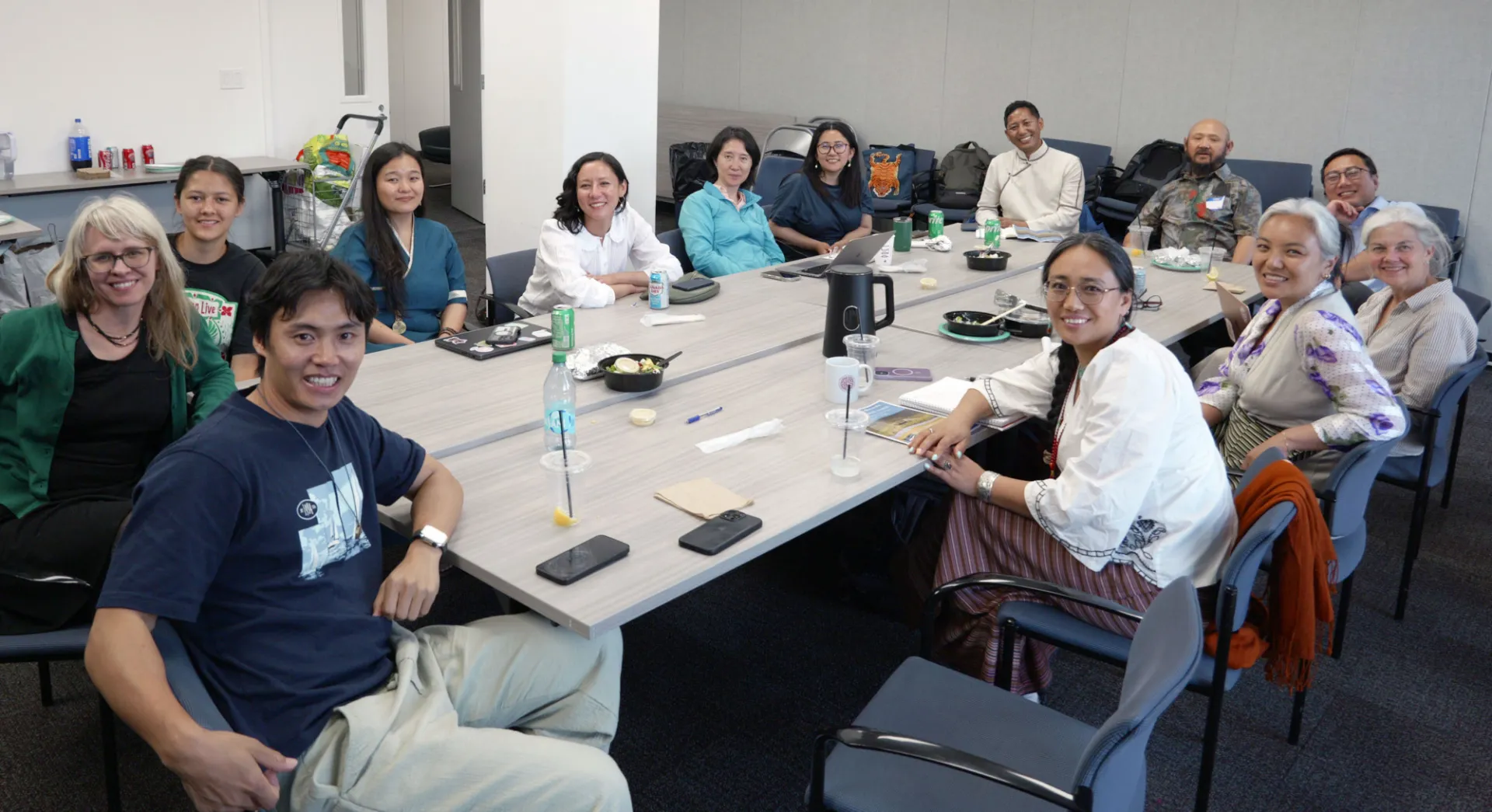
A post-conference team meeting was an occasion to reflect on next steps and collective publications. (Photo: Khashem Gyal)
The conference was capped with an engaging roundtable discussion chaired by Dr. Dekyid Monet and Dr. Lan Cuo, and featuring the thoughtful contributions of Dr. Pasang Yangjee Sherpa, Tenzin Yangkey, Tenzin Norzin (Stanford University), and Sanggay Tashi. The speakers discussed the complexities and importance of doing research that centers community priorities and aspiration, including understanding who is “the community” and the challenges of scholars themselves being evaluated differently professionally as a “native” scholar. A common perspective voiced by Sanggay Tashi and shared by the other discussants is the necessity of reciprocity between researchers and the communities they study, which goes beyond research and publications. Others, such as Dr. Yangjee Sherpa, emphasized the need for involving Indigenous scholars and community members in academic conversations regarding climate change mitigation strategies.
According to conference organizer Dr. Dekyid Monet: “It was our intent that the conference also attends to how Indigenous scholarship is done, including how we do this academic gathering.” Ceremonies of sung prayer and poetry opened both days of the conference to recognize and honor the vital knowledge vessels and expressions that Tibetan and Himalayan communities have practiced. These include the intellectual traditions of singing and poetic creation, which carry deep ancestral, cosmological, environmental, and dynamic knowledge and relationships. She added: “To emphasize the importance of physical presence and embodied experience in community building and knowledge sharing, the gathering was kept primarily free of virtual attendance or video recordings. The intention to learn from and to support Indigenous perspectives and intellectual principles was also closely practiced in how panels were designed and how conversations were encouraged to be generative.”
The “Living with Climate Change in the Himalayas and on the Tibetan Plateau” conference ended with the presenting of khatags (traditional ceremonial scarves) and a call for continued dialogue on the subject and continued effort to build stronger community in the future, with many participants expressing enthusiasm for the possibility of future gatherings to be hosted at Columbia and other institutions.
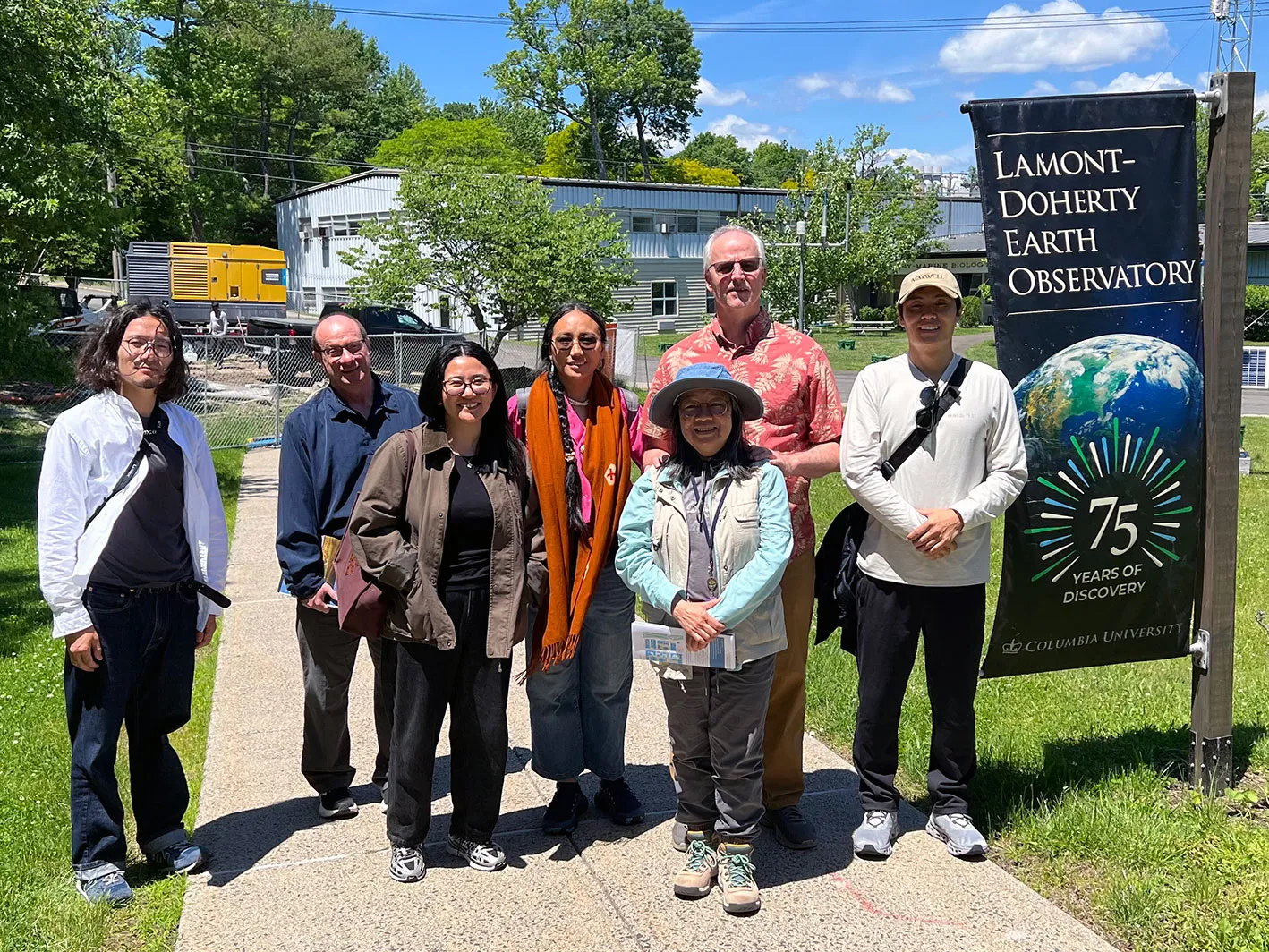
Conference presenters join dendrologist Brendan Buckley and geologist Mike Kaplan at the Lamont-Doherty Earth Observatory campus in Palisades, NY.
Conference agenda, speaker bios, and recommended readings
Profile page for Weatherhead East Asian Institute Postdoctoral Scholar Dr. Tashi Dekyid Monet
Article co-author Caitlin Hayes is a PhD student in Modern Tibetan Studies specializing in modern Sino-Tibetan media histories.