
WEAI Community Feature: MARSEA Students Linda Hong Cheng and Marcus Tan
The Weatherhead East Asian Institute is made up of a vibrant community of students, scholars, visitors, and others, brought together from across disciplines in the study of modern and contemporary East, Southeast, and Inner Asia. In this Community Feature, we are pleased to highlight two students in the Master of Arts in Regional Studies –– East Asia (MARSEA) Program, Linda Hong Cheng and Marcus Tan, and the exciting work they are doing at WEAI.
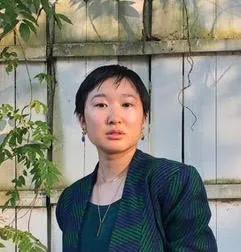
Q&A with Linda Cheng
Hometown: Beijing, China and North Carolina
Previous education: UNC-Chapel Hill, History and Economics
Specialization in MARSEA: China
Academic interests: Mixed sociological methods, gender/women, collective resistance, social stratification, migration, Chinese society
1. Could you please start by introducing yourself?
My name is Linda Cheng, and I graduated from UNC-Chapel Hill. My senior honors thesis analyzed state-society relations in the decade leading up to the 1989 Tiananmen Square protests, exploring the multitudinous reasons student demonstrators chose "Nothing to My Name" as their protest anthem. It was awarded best honors thesis by the university. I am currently a MA student in the Regional Studies: East Asia program. My research interests bridge subfields as diverse as gender/feminism, protest/social movements, political/historical sociology, social media, media dissemination, China studies, and computational social science.
2. What led you to this area of study and ultimately to joining the MARSEA program?
My senior honors thesis at UNC sparked my interest in furthering social scientific analysis of contemporary China. What attracted me most to MARSEA was its curriculum flexibility and social scientific focus. Through MARSEA, I have been able to connect with a great research advisor, mature as a researcher, and develop long-lasting relationships.
3. What do you hope to do with the skills you acquire through the MARSEA program?
With my skills acquired at MARSEA, I hope to contribute to increasing mutual understanding between China and the west. In particular I hope for my research to aid in building bridges between marginalized social movements within China and Euro-America.
4. How has your time in the program been so far -- have any classes or experiences stood out as particularly valuable or enriching?
I have found my time at MARSEA to be intellectually enriching. I have particularly enjoyed my classes with Yuan Yi (Made in China history class), and Akbar Noman (Comparative Political Economy of East Asia). Dr. Yi’s class critically explored the history of production as both a physical and social process within China, through the lens of gender, colonization, capital, the nation-state, so-called ‘modernity', et cetera. It was a compelling and eye-opening course. Dr. Noman’s class was both expansive in breadth—comparing East Asian countries to each other, and to other regions of the Global South—and thorough in its analysis of the relationships between governance, economic development, and social change.
5. Has there been any shift in your perspective since you began the MARSEA program?
I would say that my perspective on China (my area of concentration) has shifted quite a bit since I began at MARSEA. Through courses, conversations with professors, as well as my own research, I’ve developed a much more nuanced understanding and critical outlook on complex issues within Chinese society. I’ve learned how to better situate my analyses within both the particularities of China, as well as the macro-realities of global neo/colonial capital and western hegemony. My analysis of China and beyond has shifted away from one that centers nation-statism, to one that critically interrogates the role of the state within society.
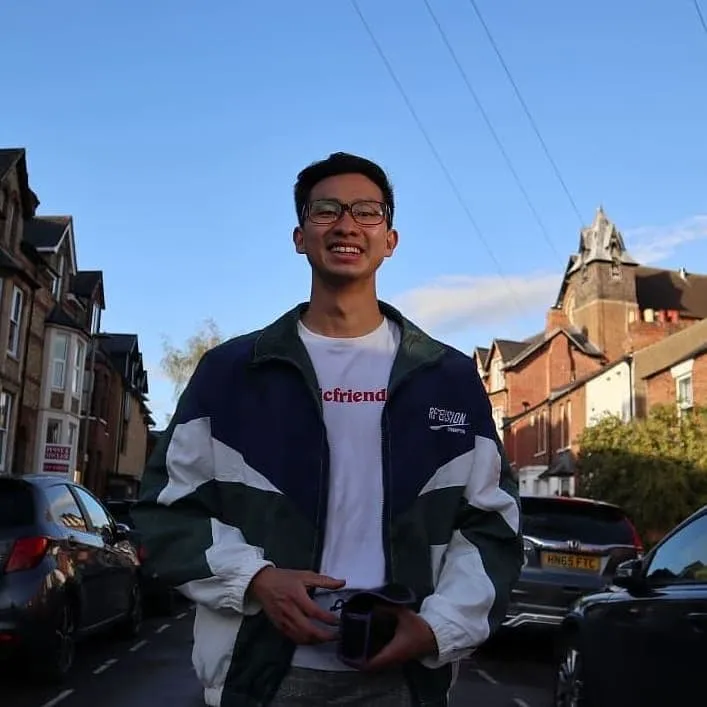
Q&A with Marcus Tan
Hometown: Singapore
Previous education: Harris Manchester College, University of Oxford; History and Politics
Specialization in MARSEA: China
Research interests: Global Early Modernity, and its continued parallels and connections to Contemporary International Affairs
1. First, could you please introduce yourself?
Hi, I am Marcus, and am currently a candidate for the MARSEA program. Prior to this, I studied History and Politics at Harris Manchester College, University of Oxford. I am currently researching China's panda diplomacy, which despite being commonly accepted in mainstream media, has not been extensively studied from an academic point of view. For my thesis, I plan to use textual analysis of Chinese statements on panda diplomacy to analyze why China has pursued such a policy, and what this suggests about China's perception of its role in the international order. In the past, I have also researched about early modern diplomacy, writing my undergraduate thesis about the diplomatic interactions between the Zheng organization and the Dutch East India Company in Taiwan in the 1660s. I also am hugely interested in issues of global early modernity.
2. What led you to this area of study and ultimately to joining the MARSEA program?
I have always been intrigued by international relations and diplomacy, and felt that it was imperative to further study China's foreign policy following its rise in the past half-century. I have also been interested in International Relations (IR) perspectives which extend beyond the realist and liberal readings of China's rise, especially in identifying China's own perspective of IR, which has received little scholarly attention. I felt the MARSEA program was perfect for this, firstly given the broad array of courses offered by the excellent faculty at the Weatherhead Institute, and second because of the emphasis on History, which I feel is essential to understanding policies in the present.
3. What do you hope to do with the skills you acquire through the MARSEA program?
I hope to have a better understanding of China and East Asia, and the issues which are currently important to the region.
4. What resources have you found most useful at Columbia, in New York, or within WEAI?
I have found the faculty in the WEAI, and indeed in Columbia as a whole, extremely impressive in terms of the wide array of expertise available. There has been a huge breadth of courses offered, and through taking courses as diverse as Climate in History and Comparative Economic Development, I have been able to develop a far better understanding of various facets of the region. While researching for my thesis, I also found that there were so many professors I could ask for advice from, and many of these professors are also pioneers in their respective fields who could offer unique insights I otherwise would not have access to.
5. What extracurricular activities are you engaged with?
I am currently a member of the Columbia University Road Runners club, and run regularly around Columbia, and in New York running events such as the Brooklyn half-marathon in April which I am greatly looking forward to. I also play recreational table tennis with the club in Columbia. Outside of Columbia societies, I go to the gym thrice a week, and also play soccer as much as I can using apps like JustPlay, where I regularly join 7-a-side and 11-a-side games. Last, I also spend lots of time hanging out with my MARSEA program mates outside of class –– we go for hotpot, Korean BBQ, and drinks often, and I could not ask for a better group of people to do this course with.