
Author Q & A: For Anri Yasuda, Japanese Literature Illustrates Why 'Beauty Matters'
Early-20th-century Japanese writers understood literature as both an art of beauty and emotion and a way to respond creatively to real life.
What is the proper balance between life and art? If human beings have an innate need for beauty in their lives, how does that need fit alongside all the other demands of everyday life? And is a belief in “art for art’s sake” compatible with the claims of adult citizenship?
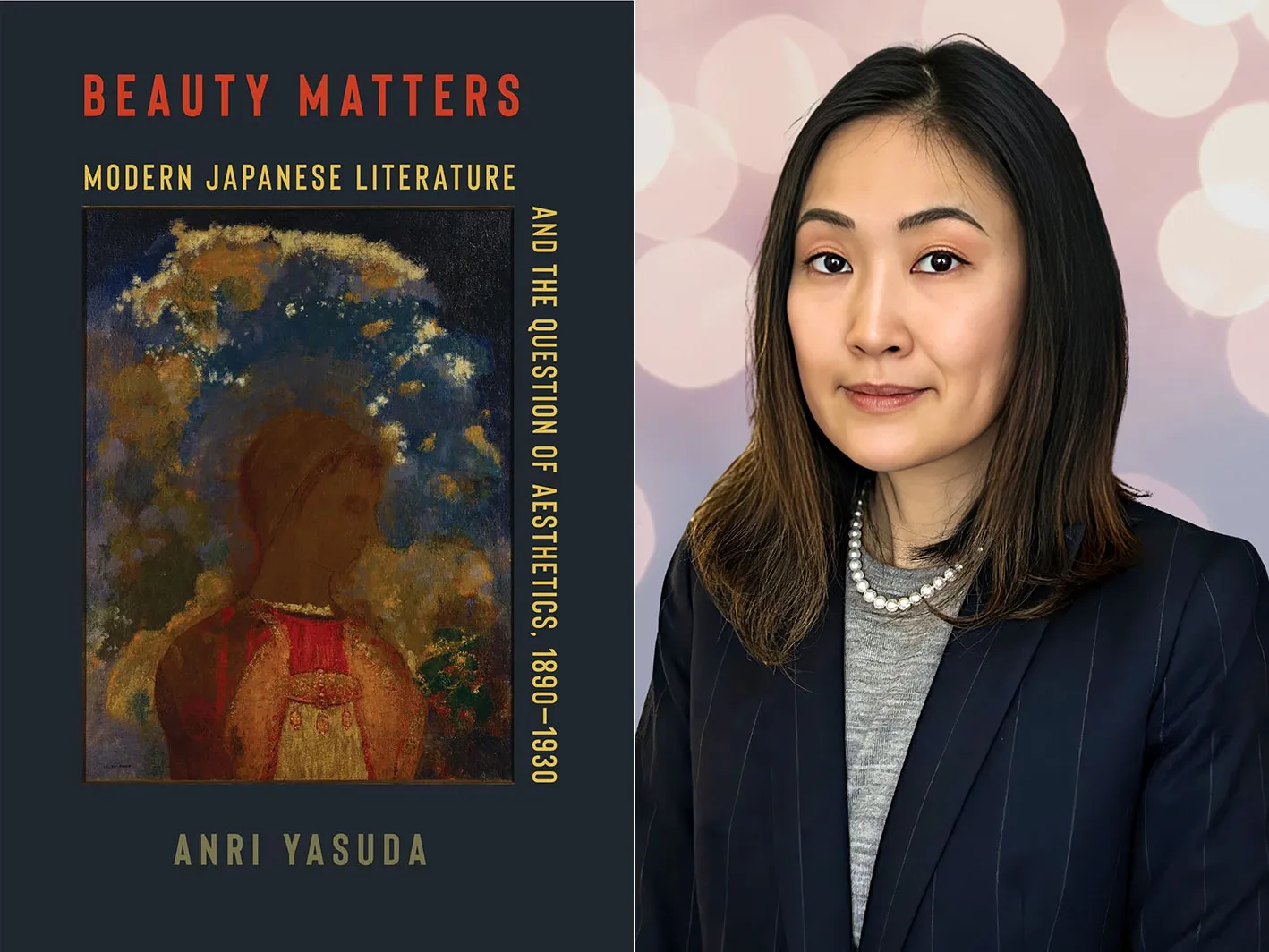
In Beauty Matters: Modern Japanese Literature and the Question of Aesthetics, 1890–1930 (Columbia University Press), a 2024 title in the Weatherhead Studies series, Anri Yasuda of the University of Virginia explores these and related questions by focusing on a handful of Japanese writers of the late Meiji (1868–1912) and Taishō (1912–1926) periods. Grappling with new forms of subjectivity introduced by their country’s accelerated leap into modernity and simultaneous exposure to Western art forms, these writers came to see literature as its own unique realm of thought—one that could encompass both emotional yearnings and aesthetic ideals while also reflecting rational engagement with real-world issues. In other words, they prized literature both as an art form and as a way to respond creatively to life outside of art.
At the same time, in Yasuda's telling, these writers all found in contemporary visual art, Western visual art in particular, a major source of inspiration for both their specific literary works and their personal credos.
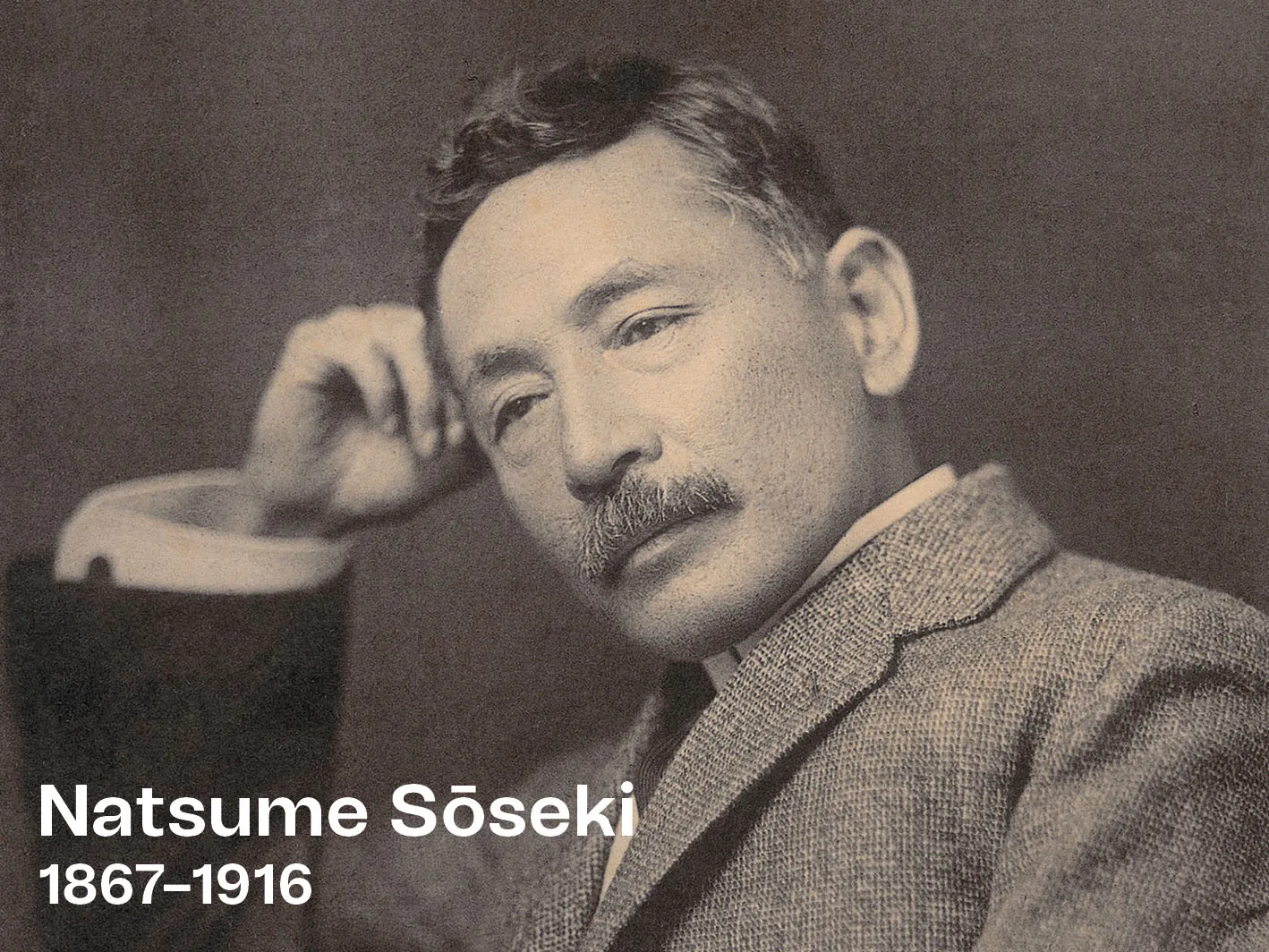
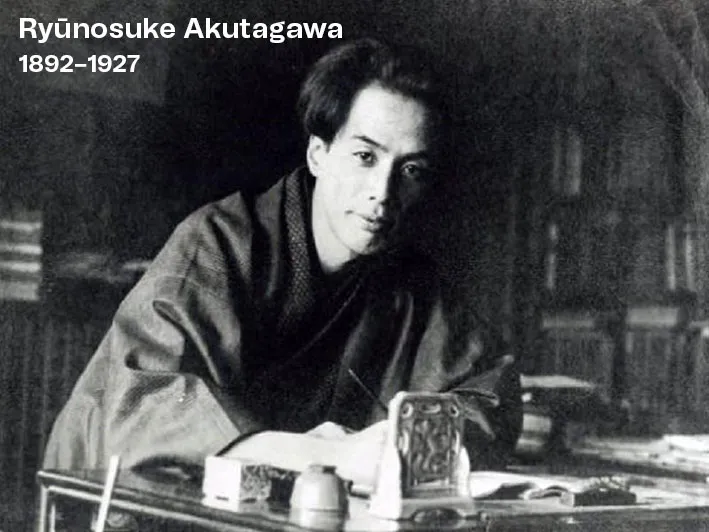
Foremost among Yasuda’s subjects are two of Japan’s best-known modern authors (and two writers every lover of fiction should know about), Natsume Sōseki (1867–1916) and Ryūnosuke Akutagawa (1892–1927). Readers also meet Ōgai Mori (1862–1922), the army medic whose three canonical stories inspired by his studies in Germany in the 1880s are credited with helping create a modern Japanese literature; and Musunokōji Saneatsu (1885–1976) and his cohort in the Shirakaba group, who shared their fanatical devotion to Post-Impressionist painting and the sculptures of Auguste Rodin in the pages of an avant-garde arts journal they published from 1910 to 1923.
Throughout the book, Yasuda stays cognizant of the fact that very few people have the time and resources to dedicate themselves to refined aesthetic concerns, deftly acknowledging contemporary debates around “privilege” and the like even as she remains sympathetic to her subjects’ preoccupations. Beauty Matters is ultimately a graceful argument for literature as an “inherently volatile and exceptionally capacious mode of interfacing with the world”—one that still has “the capacity to comprehend the modern world in a vital way that [can] hold its own against the social and natural sciences.”
Anri Yasuda is an assistant professor of Japanese in the Department of East Asian Languages, Literatures, and Cultures at the University of Virginia. She received her BA, MA, and PhD from Columbia University. Via email, she answered questions about Beauty Matters.
One place to start with Beauty Matters is its productively ambiguous title—ambiguous because the second word can be read as either a noun or a verb. Can you talk a little about the shift in emphasis that results from these differing interpretations?
Anri Yasuda: I think aesthetics is often seen as a trivial concern, and that the phrase "beauty matters" evokes the sort of dismissive tone that is used when people bypass the topic in favor of more "substantive" subjects. But when we recognize that the propensity to appreciate something as beautiful is an irreducible facet of human nature that deserves examination, we can say that beauty counts, or that it matters. The authors I examine in the book often faced charges of frivolity for their investment in beauty matters, but they each, in their own ways, succeeded in expressing that beauty matters.
In its understated way, Beauty Matters becomes a stirring call for reading, studying, and thinking about literature as something other than, or more than, sociopolitical critique. How did you come to realize that a handful of Japanese writers from the turn of the last century were an ideal springboard for making this case?
Yasuda: In late-19th to early-20th-century Japan, when the influx of Western cultural influences occasioned an especially explicit and intensive questioning about the meanings and aims of "literature," "art," and "modernity," writers grappled with foundational questions about their work. What is the role of literature in modern life? What makes for "good" literature? Such questions seemed to circle the fact that it is not just for practical reasons having to do with gain or benefit, but also for affective ones catalyzed through aesthetic elements, that people are drawn to literature.
I became fascinated by how late-Meiji and Taishō period writers viewed literature’s aesthetic appeal as both obvious and confounding. They understood the potential for literature to shape readers’ views about real-world issues, but they knew that it is literature’s ability to connect with people on an aesthetic (i.e., not utilitarian) register that gives it its resonance. I was also interested in how this group of writers seemed to see the dynamics of aesthetic sentiments—privately felt, but also communally relatable—as illumining the ambiguities of modern subjectivity.
When they were younger, many of these writers shared an almost dogmatic belief in a divide between art and life, or what you refer to as “the realm of their artistic ideals and that of their lived experiences.” Yet they later came, in their various ways, to some kind of accommodation that allowed them to see these two opposed spheres as complementary. Was there something about life in the late Meiji and Taishō years that spurred that evolution in their thinking, or was it simply a natural outcome of their getting older?
Yasuda: I like how you phrase this! It does seem to be a timeless, universal pattern for youthful idealism to give way to practical, sensible compromises in middle age. (I am also thinking about the fun, impractical shoes that I used to wear when I was younger compared to the flats I tend to favor today.) Put differently, I think we come to appreciate that things tend to be nuanced and complex rather than starkly absolute.
The late Meiji and Taishō era was indeed a time of maturation for modern Japan at large, as the nation settled into its identity as a centralized, industrialized society. Writers and artists found that their lofty artistic pursuits had to be calibrated with meeting the demands of productivity in an ever-expanding market economy, and that their cosmopolitan ideals had to be balanced with entrenched conventions and local realities. Thinkers of later eras seem to have become braced for such challenges, thanks to the experiences of this pivotal generation.
For a non-specialist reader of your book, the Shirakaba writers are a little more difficult to pin down in terms of a legacy. Their understanding of the post-Impressionists was necessarily partial and imperfect, but at the same time their mania for a foreign art form feels completely contemporary: they seem like some of the first “fans,” as we use that term today. What did the Shirakaba group bequeath to later generations?
Yasuda: I agree that the Shirakaba group were harbingers of many characteristics that mark today’s cultural discourses. For one, they were "influencers" of taste; through expressing their "fandom" of Post-Impressionism and other modern Western artistic developments in their publications, they shaped artistic preferences and standards for large segments of the Japanese literati. I think the persistent, widespread fondness for Post-Impressionism in Japan today can be traced back to the Shirakaba group.
They also embodied a cosmopolitan confidence that enabled subsequent generations of Japanese thinkers to see themselves as part of a globally linked modernity. Even their spirited and vocal resilience against critics, who ridiculed them for their aristocratic indifference to the social and material challenges that most people face in modern life, feels quite contemporary. As media figures, they were at once aspirational for their aristocratic backgrounds and idealism, and relatable for sharing their subjective perspectives with their readers. Mushanokōji in particular was known for his plain and unpretentious linguistic style, and the unapologetic confessions of his often shockingly naïve perspectives.
The strain of Japanese writing you focus on here is so rich that a newcomer feels a pang at the thought it might have effectively ended with Akutagawa’s death in 1927. Does what I’ll call (at the risk of oversimplification) the aesthetic tendency reappear in literature of the postwar era? Some readers might think of Osamu Dazai (1909–1948), for instance, who was an admirer of Akutagawa’s work as well as an occasional painter and designer himself.
Yasuda: I think that by definition, literary works from all eras, even the most realist or ideologically tinted, can be analyzed in terms of their aesthetic elements. Akutagawa was certainly not the last writer to devote attention to these irreducible qualities of literature that make it art, or to despair over the chasm between aesthetic possibilities and less inspiring realities. Dazai is a great example of a later author who confronts these issues. Mishima Yukio too engages with aspects of these ideas.
In the late twentieth century and early twenty-first centuries, the tensions between aesthetics and critique have also loomed large in mediums like manga and anime. And going forward, I think that across a range of disciplines and practices, the topic of aesthetic sensibilities will be of importance in conversations about the qualities that remain unique to humanity as AI technologies continue to evolve, meeting and exceeding the human capacity for quantitative analyses and logical syntheses of information.
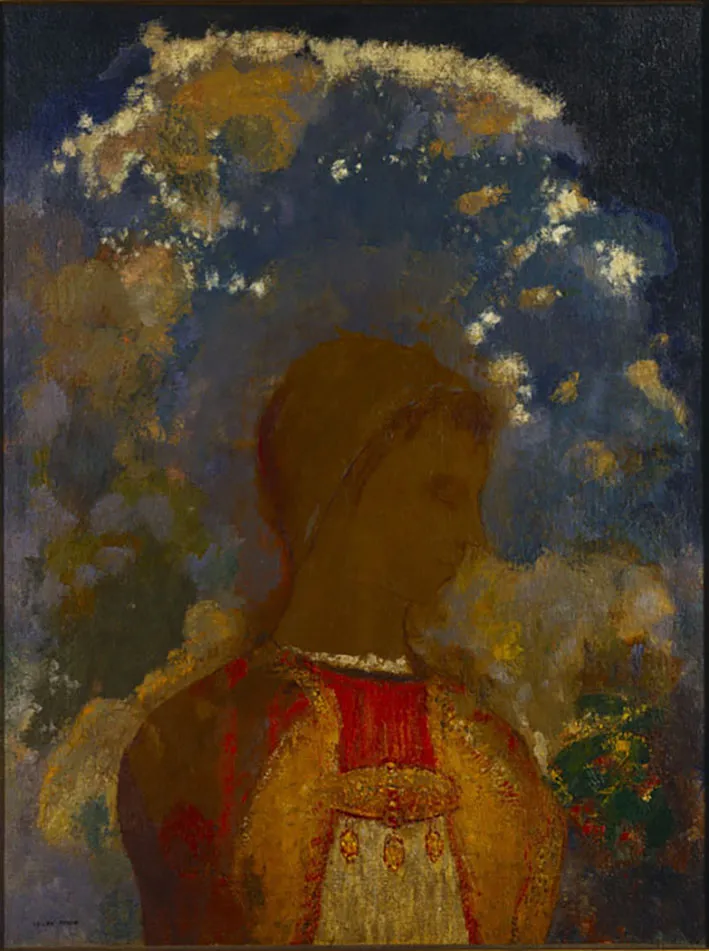
Image, above: Bouddha sans sa jeunesse by Odilon Redon (1840–1916). Oil on canvas, 1905. (The National Museum of Modern Art, Kyoto)
Ryūnosuke Akutagawa cited this painting, one of the first works by the French artist Redon to enter Japan, as an artwork that evoked the sense of disorientation he felt when contemplating the ethos of "the West." It appears on the cover of Anri Yasuda's Beauty Matters: Modern Japanese Literature and the Question of Aesthetics, 1890–1930.
Portraits of Ryūnosuke Akutagawa and Natsume Sōseki: Wikimedia Commons.