
From Tibet, a Human-Interest Documentary Captures a Society in Flux
Asia in Action Fellow Khashem Gyal’s Daughter of the Light depicts a family fracturing under pressures of a rapidly changing world.

Khashem Gyal, the Weatherhead East Asian Institute's Asia in Action Fellow, at Lenfest Center for the Arts on April 24, 2026. (Diane Bondareff Photography)
The Columbia community enjoyed an unusually intimate perspective on the changes transforming contemporary Tibet last month, when filmmaker Khashem Gyal screened his documentary feature Daughter of the Light (2024) before a sold-out crowd at the Lenfest Center for the Arts.
A part of the Weatherhead East Asian Institute’s Asia in Action series, the April 24 event was also presented in conjunction with the Modern Tibetan Studies Program’s “Tibetan Education: Theory and Praxis” workshop held on the Morningside campus earlier that day.
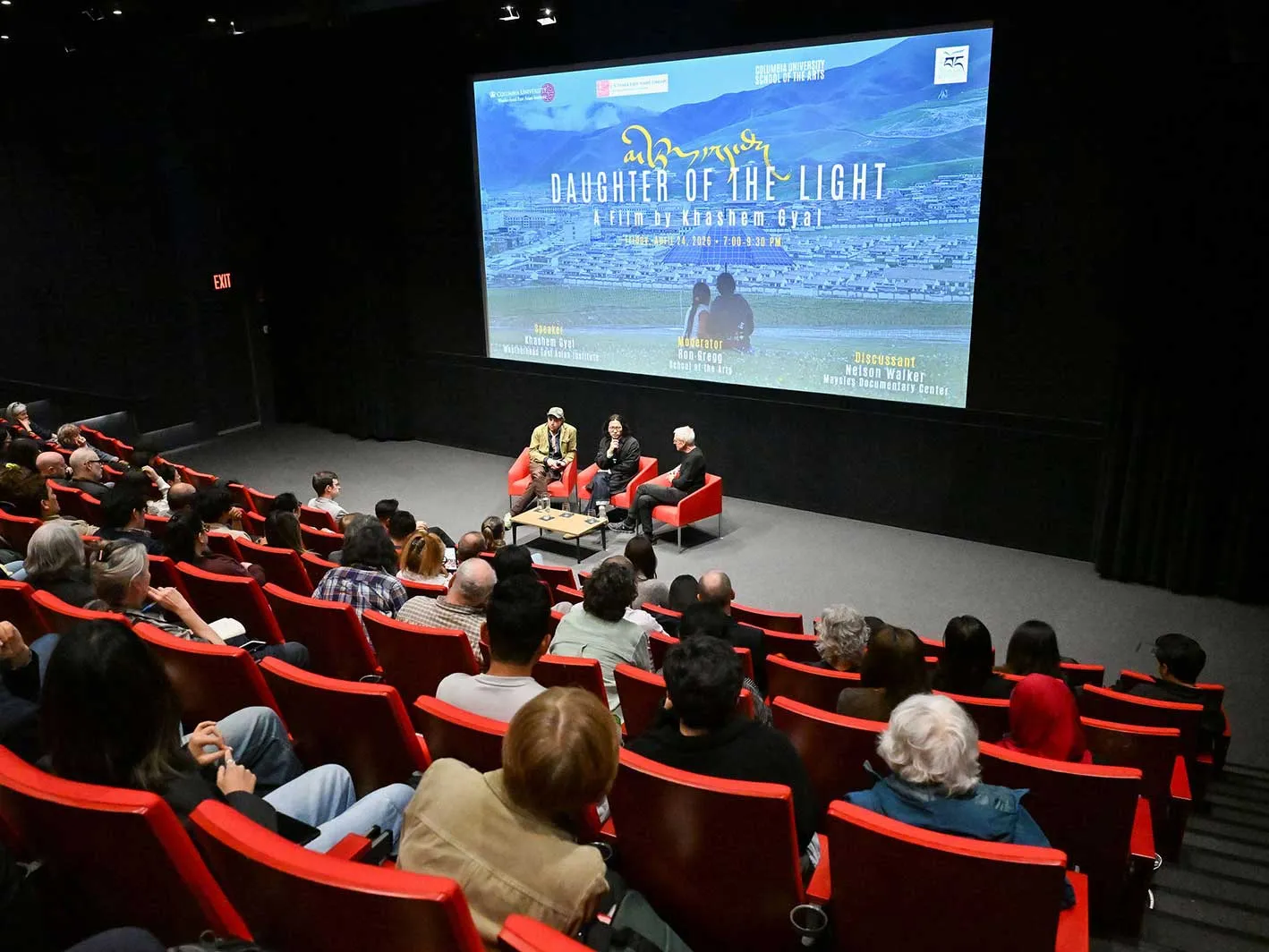
L–R: Nelson Walker, Khashem Gyal, and Ron Gregg at the Lenfest Center for the Arts on April 24, 2026. (Diane Bondareff Photography)
Khashem Gyal is the current Asia in Action Fellow at the Weatherhead East Asian Institute and Adjunct Assistant Professor of Film at the School of the Arts. A native of the Amdo region of northeastern Tibet, known for its traditionally pastoral and nomadic culture, he has been committed, from the beginning of his directorial career, to telling stories of individual struggles amid the social changes taking place in Tibet. His first documentary, 2013’s Valley of the Heroes explores the transition of language and culture among Tibetans and other minority populations in Qinghai Province.
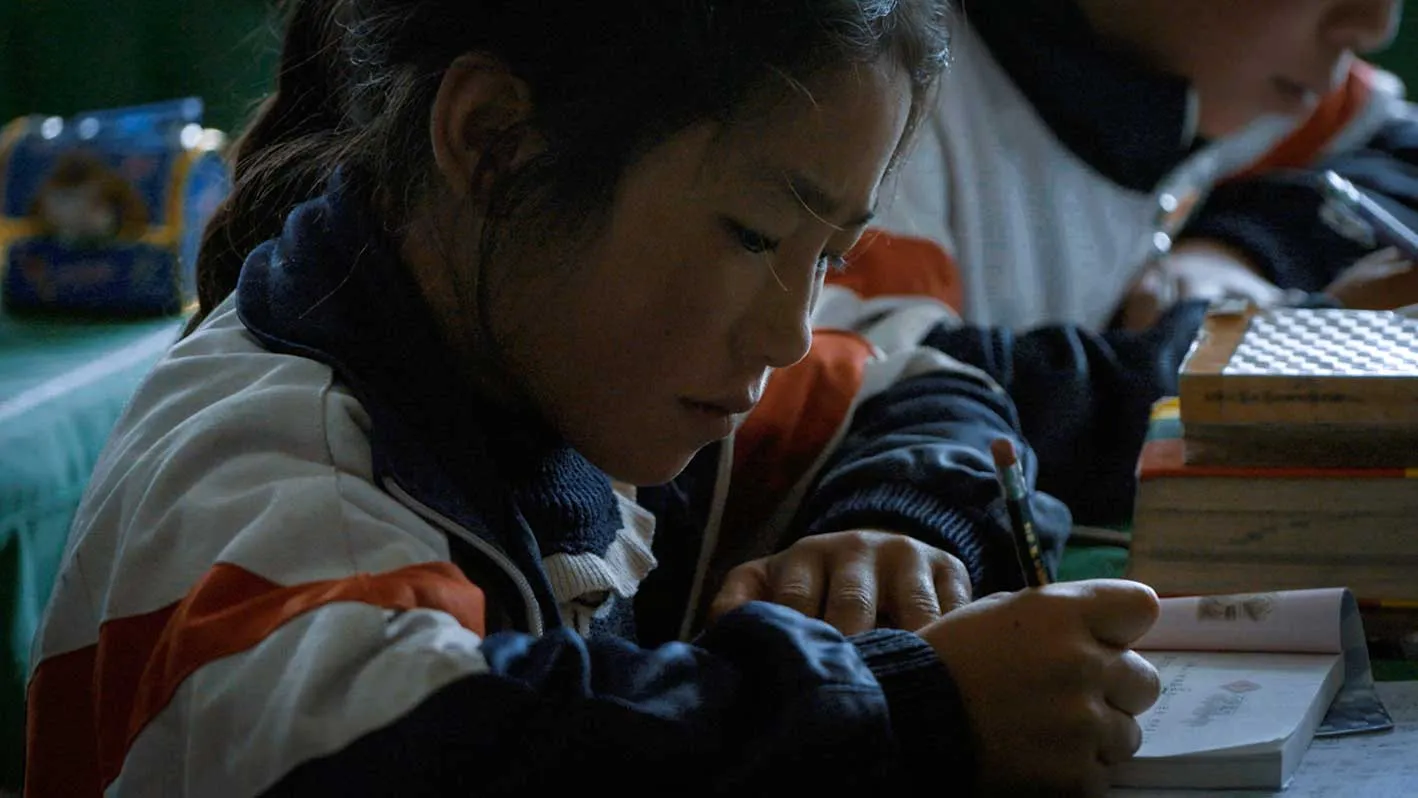
Metok Karpo in Daughter of the Light. (Courtesy Khashem Gyal)
Daughter of the Light follows Metok Karpo, a thirteen-year-old girl in a rural town who lives with her grandparents and attends a boarding school for orphans while her parents are getting a divorce. In one especially affecting sequence, the camera follows her to a remote hinterland where she hopes to get better acquainted with the father she barely knows. Khashem deftly situates the family’s story against a wider backdrop of generational and social change, as rapid social change upends the community’s traditional way of life.
In 2024, Daughter of the Light was screened in more than 200 cities across China, becoming the first Tibetan documentary film in Chinese cinema history to receive a nationwide theatrical release. (Khashem told the Lenfest audience that he personally attended 45 of those screenings.) Marking another milestone for Tibetan filmmaking, the film became one of the most-watched documentaries in China that year.
A panel discussion after the screening brought Khashem onstage with Ron Gregg, Senior Lecturer in Film and Media Studies at Columbia School of the Arts, and filmmaker Nelson Walker of the Maysles Documentary Center.
As Walker related for the audience, he first met Khashem in Tibet in 2011, when the latter was a student at Qinghai Nationalities University. Walker was visiting because he had just co-directed Summer Pasture, a 2010 documentary about a nomadic family in eastern Tibet; Khashem later made a short film about the same family after they resettled in an urban area.
Acknowledging his reunion with Khashem on the Lenfest stage, Walker said, “I’m so honored, and it’s a special moment. . . . I never would have dreamed I’d be here with him today.”
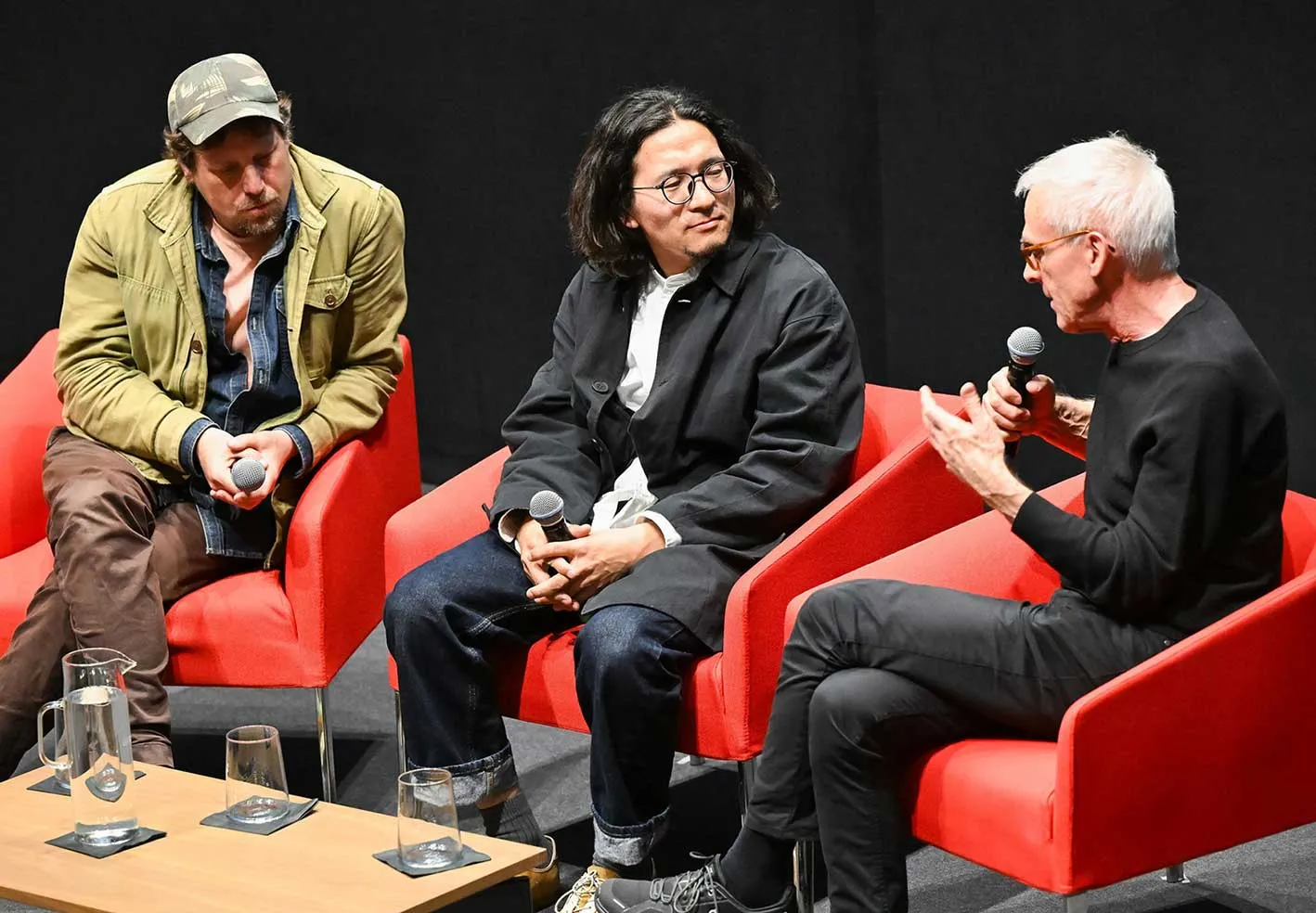
L–R: Nelson Walker, Khashem Gyal, and Ron Gregg. (Diane Bondareff Photography)
Khashem shared some of the backstory behind Daughter’s making. Adult perspectives on Tibet’s ongoing transformation are by now commonplace, he noted, but he had long hoped to encounter a younger person’s experience of such a rapidly changing society. To obtain that perspective, he and his production team spent four months interviewing more than 175 children, who were then winnowed down to 13 candidates, then three, before they settled on Metok.
Khashem explained that the preliminary screening showed him how many stories he could have told; what made the difference, he said, was that Metok’s story was “still unfolding.” Her parents’ divorce, for instance, caught him by surprise.
Another distinctive quality made Metok a compelling subject. An imaginative child with a talent for drawing and painting, she possessed what Khashem described as “an amazing artistic inner world,” one that deeply compelled him to further explore her inner life. Initially she was reluctant to let the filmmakers into that world, because some of her teachers and fellow students had ridiculed her drawings, but gradually she became more confident about sharing her creativity. (Khashem lived and taught at the orphans’ school for two years while making the film.)
Walker noted that Daughter of the Light’s emotional candor could only have come about through a delicate rapport between the director and his principal. “In a subtle way,” he said, “the film is a portrait of its maker as well as its ostensible subject.”
Gregg commented that Khashem treated Metok’s parents with a similar sensitivity, humanizing them to such an extent that well before its conclusion the film is “much more complicated” than the story of abandonment it might initially seem to be.
Khashem replied that one of his aims was to show how everyone in rural Tibetan society is dealing with the sense of precariousness wrought by an abrupt entry into modernity, hyper-accelerated in this context by smartphones and social media. “They all have their own struggles, traumas, challenges.”
He added that while the impact of 21st-century technology is obviously visible “in a very dramatic way” in nomadic areas of Tibet, “the issues that we can see in the film are also happening everywhere in the world, with different forms.”
A round of questions from the audience yielded additional insights into Khashem’s process. In his answers, the filmmaker emphasized how the contributions of his production team helped him realize his aspirations for Daughter of the Light.
At the outset, that team consisted of three people: himself, a producer, and an art director. After an early version of the project won the TokyoDocs Colors of Asia award — beating out hundreds of competing pitches — Khashem brought on board internationally acclaimed director Pema Tseden and Japanese director Takeshi Sano; an Austrian editor who lives in Japan; an English sound designer based in London; and a Japanese composer who created the score.
Their presence was important, the director continued, because he knew he wanted some combination of insider/outsider perspectives to document the many changes he saw happening on the ground in his native region. “I always wanted to have the balance of subjectivity and objectivity, to project . . . the space within the film.” An international team comprising different viewpoints, and generating different ideas, allowed him to achieve that goal.
A late round of questions brought the discussion back to Daughter of the Light’s heartbreaking principal subject. Audience members asked, Where is Metok now? Had she seen the film?
Khashem reported that, having just graduated from high school, Metok is now in her first year of college, majoring in art and learning both traditional Tibetan thangka and Western styles. In 2024, she attended screenings of the completed film in Beijing and Qinghai; later, whenever Khashem returned from screenings elsewhere in China, she would grill him about the most recent audience reactions. Khashem cited Metok’s public remarks at the movie’s Beijing premiere:
“She hoped that, through the film, people would understand people like her and, at the same time, students at this school.”
Watch the complete program:
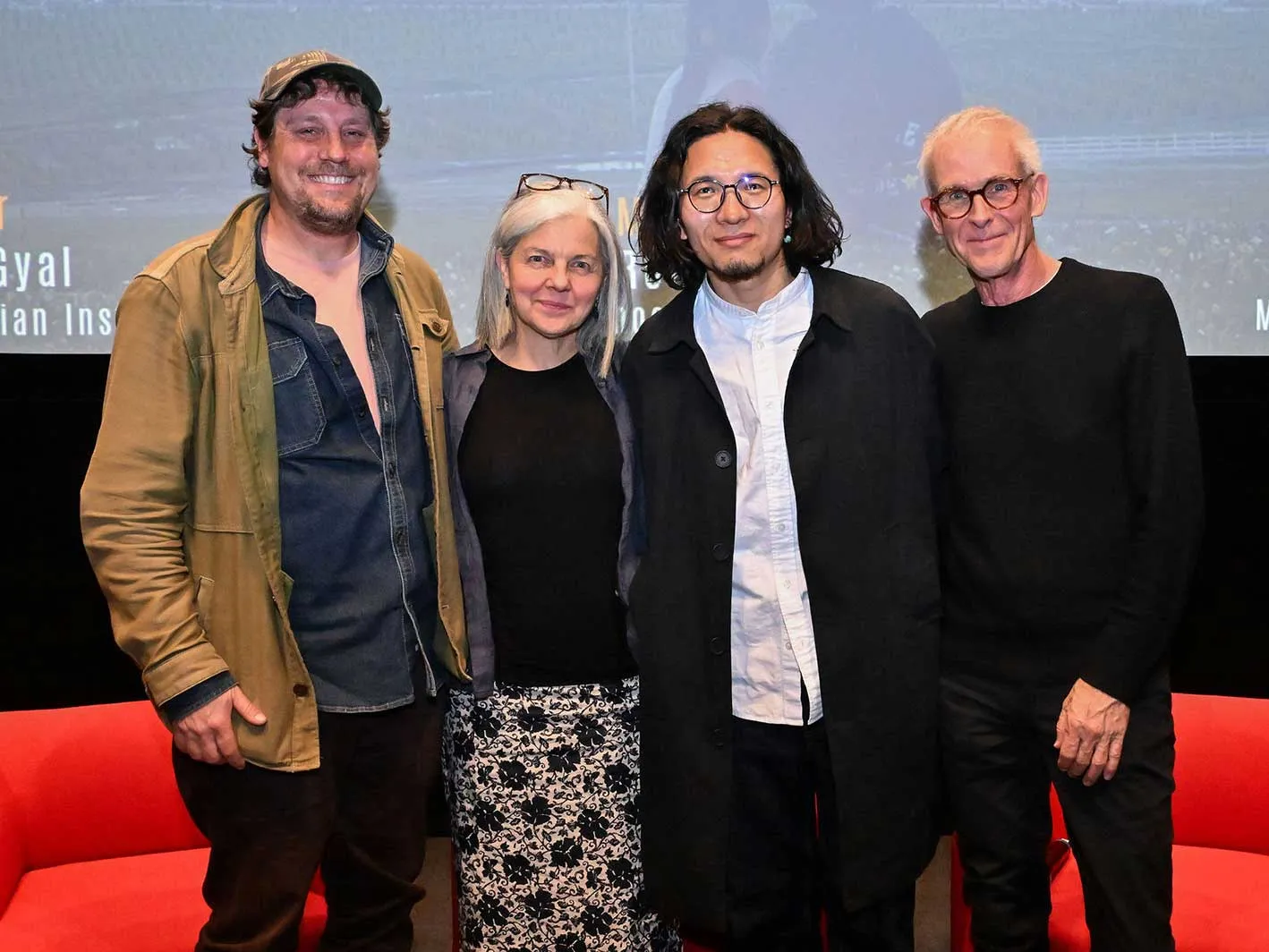
L–R: Nelson Walker; Lauran Hartley, Director of the Modern Tibetan Studies Program; Khashem Gyal, and Ron Gregg. (Diane Bondareff Photography)
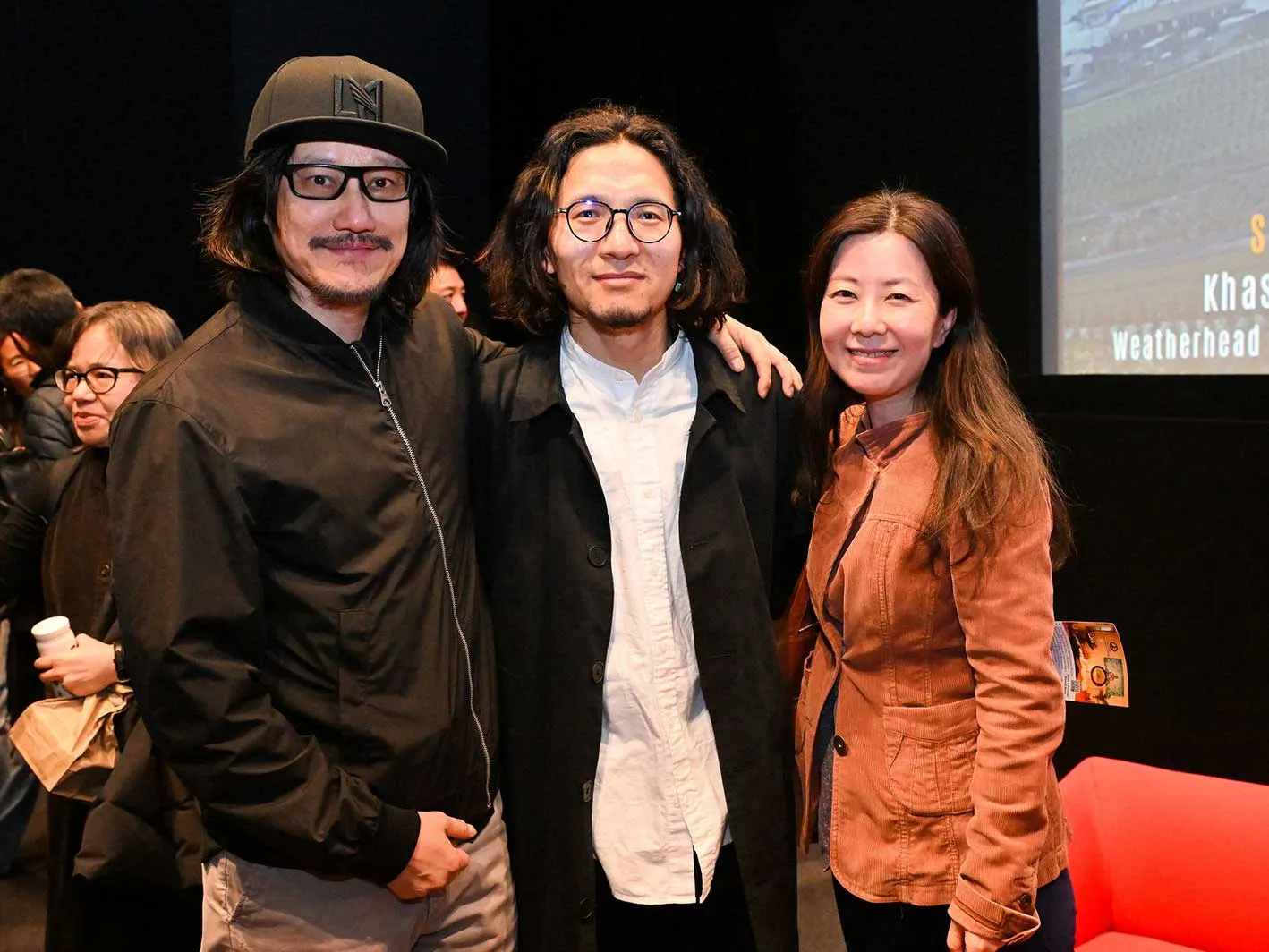
L–R: Filmmaker Tony Bui, Director of the Weatherhead East Asian Institute's Viet Arts in Action program; Khashem Gyal; and Ying Qian, Associate Professor in the Department of East Asian Languages and Cultures. (Diane Bondareff Photography)
The April 24 Daughter of the Light screening was hosted by the Weatherhead East Asian Institute and co-sponsored by the Modern Tibetan Studies Program, Film and Media Studies at the School of the Arts, and the C.V. Starr East Asian Library.