
Sarah Kovner Wins AAS Grant for Study of Japanese Internment in WWII as a Worldwide Phenomenon
Japan historian's work-in-progress will consider the confinement of more than 120,000 civilians in eight countries as "an experiment in global racial management."
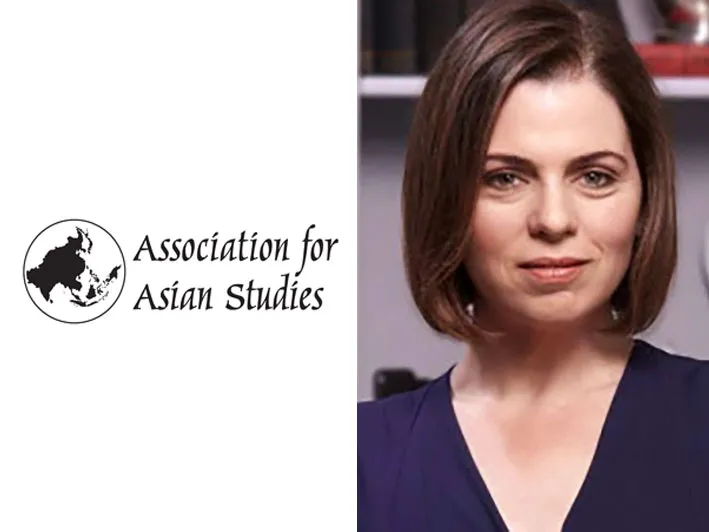
Weatherhead East Asian Institute faculty member Sarah Kovner has received a grant from the Northeast Asia Council (NEAC) of the Association for Asian Studies for a new book project, Beyond Barbed Wire: Law, Empire, and the Geography of Japanese Internment.
Kovner, a historian of modern Japan, is a Senior Research Scholar at the Saltzman Institute for War and Peace at Columbia’s School of International and Public Affairs. Her previous books are Prisoners of the Empire: Inside Japanese POW Camps (Harvard University Press, 2020) and Occupying Power: Sex Workers and Servicemen in Postwar Japan (Stanford University Press, 2012), a title in the Studies of the Weatherhead East Asian Institute series.
Beyond Barbed Wire will examine, in Professor Kovner’s words, “the wartime internment of people of Japanese ancestry as a global architecture of racialized captivity rather than an American aberration.” Tracing the confinement of more than 120,000 civilians in eight countries, and drawing on archives in Japan, Britain, India, Australia, Canada, the United States, Peru, Brazil, and Switzerland, the project will be the first single-authored monograph to study Japanese civilian internment across the British Empire, the Americas, and the Pacific during World War II. Professor Kovner intends for it to reveal internment as “an experiment in global racial management that anticipated modern crises of statelessness, surveillance, and emergency detention.”
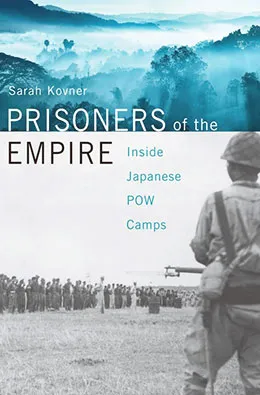
Beyond Barbed Wire grows directly out of questions that haunted Professor Kovner while writing Prisoners of the Empire. That book examined the treatment of POWs in Japanese-run camps, challenging the longstanding belief that the Japanese Empire systematically mistreated Allied prisoners and revealing how neglect, poor planning, and bureaucratic incoherence often proved as deadly as deliberate abuse. But as she traced those stories, she kept encountering another population—civilians, entire families, people who had committed no act of war yet found themselves behind wire in camps scattered across multiple continents. Their experiences didn't fit neatly into the POW narrative, and she realized they demanded their own study.
If Prisoners of the Empire asked what nations do to enemy soldiers, Beyond Barbed Wire asks what they do to people they designate as enemies—and what that distinction reveals about race, citizenship, and belonging in wartime. The two books form a diptych: one focuses on combatants and the bilateral US-Japan relationship; the other expands outward to civilians and a truly global frame, showing how nations across the Americas, the British Empire, and the Pacific participated in a shared architecture of racialized captivity. Together, they offer a more complete picture of how the Pacific War remade not just battlefields but the very categories of who could be detained, displaced, and rendered stateless—legacies we continue to live with today.
Professor Kovner will use the AAS grant toward research at UCLA and the Japanese American National Museum in Los Angeles. She hopes to finish Beyond Barbed Wire in 2027.